Best Ducting Options: Flex Duct vs Metal Duct for Home Ventilation
Looking for the right ducting for your ventilation, heating, or exhaust project? This guide compares flexible aluminum (flex) ducts with rigid or metal ducts to help buyers choose what fits best. The top picks below focus on durability, temperature resistance, and ease of installation. The top buyers are HVAC hobbyists, DIY remodelers, and small workshop owners who need reliable air flow without complicated installs. A quick summary table of the five selected products appears after this introduction for fast comparison.
Product Quick Reference
- VIVOSUN 6 Inch Flex Air Aluminum Duct for Ventilation — 25 Feet Long
- VIVOSUN 4 Inch Flexible Aluminum Ducting — 25 Feet Long
- Rubber-Cal “HVAC Insulated-Flex” Ducting — 4-Inch by 25-Feet
- Omont Dryer Vent Hose 4 Inch, 5FT Flexible Ducting
- Simple Deluxe 12 Inch 25 Feet Ducting — Non-Insulated Aluminum
VIVOSUN 6 Inch Flex Air Aluminum Duct for Ventilation

Best for: Medium to large rooms or venting needs where maximum airflow is a priority. This 25-foot, heavy-duty, multi-layer aluminum duct is designed to move air efficiently and connect easily between spaces. The inner and outer layers use fire-retardant aluminum foil, while the middle PET thermoplastic provides puncture resistance. The included stainless steel clamps support strong, leak-free joints.
Why this choice: It prioritizes durability and heat resistance, making it suitable for dryer or ventilation runs where higher temperatures or longer runs are required. The multi-layer construction reduces the risk of leaks and tears compared to single-layer flex ducting. The clamp design supports secure connections, which helps prevent air leakage at joints.
Limitations: If you’re installing in tight or curved spaces, a very long flex duct can be cumbersome to route and may restrict airflow in certain configurations. Ensure a proper bend radius and avoid excessive kinking.
VIVOSUN 4 Inch Flexible Aluminum Ducting
Best for: Smaller rooms or dedicated vent runs where space is limited. This 4-inch, 25-foot flex duct balances flexibility with strong airflow. It uses a multi-layer design with aluminum foil and PET barrier, plus stainless steel clamps for secure connections.
Why this choice: It’s a compact option that preserves airflow while staying relatively easy to maneuver through tight spaces. It’s well suited for HVAC projects that require routing through ceilings, walls, or short runs with several turns.
Caution: Like all flex ducts, improper bending can restrict airflow. Plan routes with gradual bends and avoid sharp angles near critical joints.
Rubber-Cal HVAC Insulated-Flex Duct

Best for: installations requiring both thermal and acoustic insulation. This 4-inch by 25-foot insulated flex duct adds a layer of thermal protection, making it a practical choice in spaces where temperature changes are common.
Why this choice: The insulation helps reduce heat transfer and dampen noise, which is beneficial in living spaces or studios where comfort matters. The multi-layer approach enhances durability and resistance to leaks compared with single-layer flex ducting.
Caution: Insulated flex ducts can be bulkier than non-insulated options. Measure space carefully to ensure clearance for installation and routing.
Omont Dryer Vent Hose 4 Inch 5FT Flexible Ducting
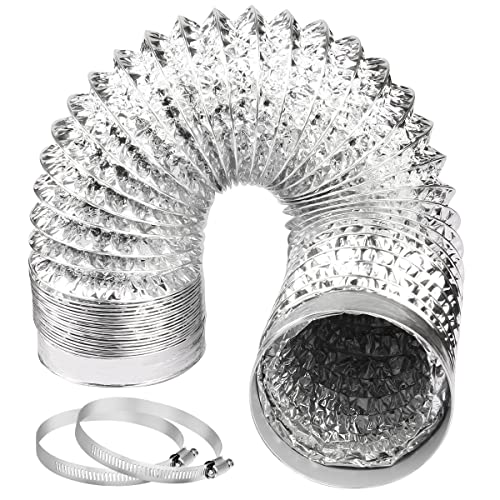
Best for: Short dryer vent runs or auxiliary ventilation where a compact length is sufficient. This 4-inch diameter duct is built with aluminum for high-temperature resistance and comes with stainless steel clamps for secure joints.
Why this choice: The product emphasizes a three-layer design with aluminum foil layers, PET, and a steel wire helix, which helps maintain shape and prevent leaks in short runs. It’s a practical choice for DIY dryer vent tasks where length is not the main requirement.
Caution: The 5-foot length may require multiple segments for longer installations. Plan to add sections if needed for extended runs.
Simple Deluxe 12 Inch 25 Feet Ducting

Best for: Long, straight duct runs where bulk is less of a concern and a wide diameter improves airflow. This 12-inch, 25-foot non-insulated aluminum duct is designed for extended routes in larger spaces.
Why this choice: The larger diameter offers higher potential airflow, making it a good option for rooms with greater ventilation needs or for connecting to larger fans or exhaust systems. The four-layer protection supports durability in longer runs.
Caution: Non-insulated duct in this size can transfer more heat or cold between spaces. Ensure appropriate placement and insulation where temperature changes are a concern.
Buying Guide: Choosing Between Flex Duct and Metal Duct
- What is the intended application? For flexible layouts and tight spaces, flex ducts are easier to route. For long, straight runs, rigid metal ducts reduce air leakage and may be more durable.
- How important are insulation and sound? Insulated flex ducts lessen heat transfer and noise. Non-insulated metal ducts can be louder and less thermally efficient, depending on the environment.
- What is the environment temperature? Aluminum flex ducts handle a range of temperatures but check the product’s rated operating range for your HVAC system.
- How much space is available? Flexible ducts take less vertical space but may need more clearance at bends; rigid ducts require straight, unobstructed runs.
- What installation concerns exist? Flex ducts are easier to cut and connect with clamps; rigid ducts require precise fittings and may need additional joints or tape for sealing.
Practical Comparison Snapshot
- Flex Duct Pros: Flexible routing, easier installation in complex layouts, lighter weight, tends to be cheaper upfront.
- Flex Duct Cons: Higher potential for air leakage at connections, can sag if poorly supported, typically less rigid than metal ducts.
- Metal Duct Pros: Lower leakage with tight joints, more rigid and durable over long runs, often better for energy efficiency.
- Metal Duct Cons: Harder to install in tight spaces, can be louder, installation requires precise measurements.
Quick Comparison Table (Key Attributes)
| Product | Diameter | Length | Insulation | Best For |
|---|---|---|---|---|
| VIVOSUN 6 Inch Flex Air Aluminum Duct | 6 in | 25 ft | Multi-layer insulation | Large rooms, long runs |
| VIVOSUN 4 Inch Flexible Aluminum Ducting | 4 in | 25 ft | Multi-layer insulation | Compact spaces, short to medium runs |
| Rubber-Cal HVAC Insulated-Flex Ducting | 4 in | 25 ft | Insulated | Thermal and acoustic comfort |
| Omont Dryer Vent Hose 4 Inch | 4 in | 5 ft | Aluminum with PET/foil layers | Short dryer vents |
| Simple Deluxe 12 Inch Ducting | 12 in | 25 ft | No insulation | Long, straight runs |
Frequently Asked Questions
- What is the main difference between flex duct and metal duct? Flex duct is flexible and easier to route; metal duct is rigid, often more airtight over long runs.
- Which duct type is best for heat efficiency? Insulated flex ducts tend to reduce heat transfer and noise; non-insulated metal ducts may require additional insulation.
- How do I prevent leaks at joints? Use appropriate clamps, proper fit to fan diameter, and seal joints with duct tape or mastic designed for HVAC.
- Can I mix duct types in one system? Yes, but plan transitions carefully to avoid pressure loss and ensure compatible sizes at each connection.
- Are bigger diameters better? Larger diameters increase airflow but require more space and longer runs; choose based on fan capacity and required air exchange.
- Is there a risk with very long flex runs? Longer flex runs can increase resistance and leakage; consider transitions to rigid duct where feasible.