Best Fans to Dry Floors for Quick Water Cleanup
Answering the need for fast, reliable floor drying, these air movers are chosen for water damage, carpet drying, and general floor relief. Each product suits different workspaces—from small crawl spaces to large commercial rooms. The top picks emphasize strong airflow, portability, and adjustable angles to target damp areas. This guide helps buyers pick the right model for residential, janitorial, or professional restoration tasks. Below is a quick comparison table of the five selected units.
| Product | Best For | Key Strength |
|---|---|---|
| Vacmaster AM201 1101 | Small to mid-sized drying jobs | 3-speed control, 42 MPH air speed |
| DEWALT DXAM-2260 | Heavy-duty water damage and restoration | 600 CFM; heavy-duty motor |
| XPOWER P-230AT | Compact but powerful spot drying | 925 CFM; stackable; daisy chain |
| VEVOR Air Mover | Flexible, versatile ventilation | Three speeds; 600–1000 CFM |
| ALORAIR GF600A | Commercial/demanding restorations | 350–600 CFM; multiple angles |
Vacmaster 3 Speed Floor Fan AM201

The Vacmaster AM201 offers three-speed performance with a top air speed of 42 MPH, designed to improve drying and cooling by directing targeted airflow. This model is well-suited for small to medium rooms where quick, controllable air movement is needed. It’s best for quick-drying projects in homes or small commercial areas where precision airflow matters. A notable limitation is that its airflow, while strong, may be outpaced by larger restoration blowers in very large spaces. Use this when you need a compact, reliable option that’s easy to maneuver.
DEWALT Portable Air Mover DXAM-2260
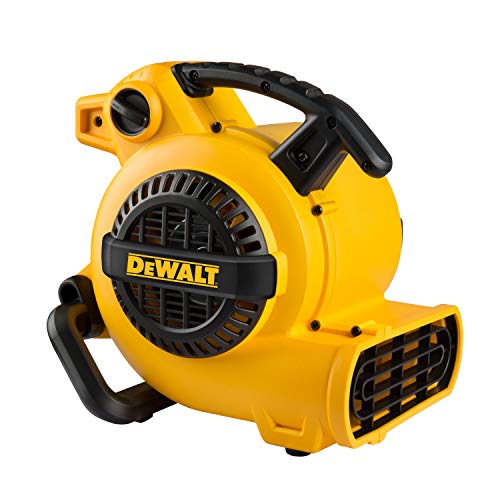
The DEWALT DXAM-2260 is a heavy-duty option with a 276W motor delivering 600 CFM. It’s designed for demanding scenarios such as water damage restoration, mold remediation, carpet drying, and janitorial applications. Best for users needing a robust, reliable unit that can handle persistent moisture and larger drying tasks. A potential limitation is its size and weight, which may reduce portability in tight spaces. Choose this if you need high airflow and rugged construction for continuous use.
XPOWER P-230AT Mini Mighty
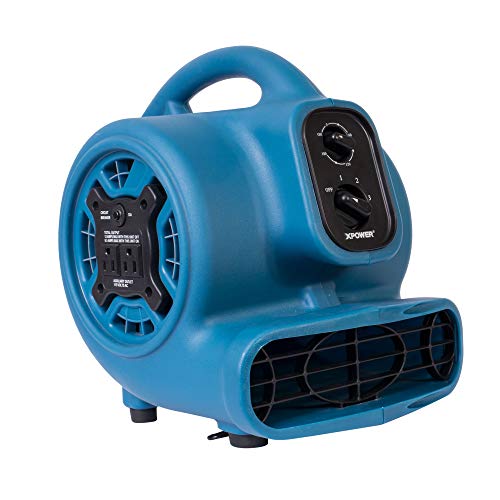
The XPOWER P-230AT is a compact powerhouse offering 925 CFM with a 1/4 HP motor. It’s lightweight (about 10.2 pounds) and stackable, with a 10-foot cord and daisy-chain option, making it ideal for tight spaces and quick, targeted drying. Best for spot drying on flat surfaces or areas with limited room. A caveat is that its compact size may limit overall airflow in very large rooms unless multiple units are used together.
VEVOR Air Mover 1000 CFM

The VEVOR Air Mover provides adjustable airflow at 600, 800, or 1000 CFM, with flexible 0°, 20°, 45°, and 90° tilt angles. This makes it highly versatile for directing airflow toward floors, ceilings, or corners. It also features an accessory outlet for daisy-chaining multiple units, which is advantageous for larger restoration jobs. A potential limitation is that higher airflow settings can be louder and require more energy. Best for flexible, scalable drying in varied spaces.
ALORAIR GF600A 600 CFM

The ALORAIR GF600A delivers 350–600 CFM with a design focused on efficiency and multi-angle airflow. It supports 5 adjustable angles and a daisy-chain capability, making it suitable for more demanding water damage projects and professional restorations. Best for users who need an industrial-grade option with controlled, adjustable airflow. A limitation is that some users may prefer higher CFM for very large rooms, though its efficiency-to-power ratio is favorable for energy-conscious operations.
Buying Guide: Key Considerations For Choosing An Air Mover
- Airflow (CFM) and coverage: Larger spaces need higher CFM. Consider whether you’ll need multiple units in tandem.
- Adjustability: Look for multiple speeds and adjustable angles to target damp areas precisely.
- Portability and size: Smaller, lighter models are easier to move in tight spaces; heavier units suit larger rooms.
- Durability: Industrial designs with sturdy housings last longer in frequent restoration work.
- Power and electrical considerations: Compare motor power, energy use, and compatibility with outlets in the work area.
- Daсky-chaining capability: If drying large spaces, the ability to link multiple units can be a major efficiency boost.
FAQ
- What is a good CFM for drying carpets? – For carpets, 600–1000 CFM is typically effective, depending on room size and moisture level.
- Should I use one air mover or multiple? – Larger or wetter spaces often require multiple units to ensure even airflow and faster drying.
- Is it okay to run air movers for extended periods? – Yes, many units are designed for prolonged use, but follow manufacturer guidelines and ensure proper electrical safety.
- What angle should I set for floor drying? – Aim for angles near 0° to 20° to direct airflow toward the damp floor without creating turbulence.
- Are daisy-chain options important? – They’re beneficial for covering larger areas by connecting several units, improving efficiency.
- Do I need a heavy-duty model for residential use? – For typical home water leaks, a mid-range model with 600–800 CFM is usually sufficient; reserve heavier units for larger restoration jobs.