Best Duct Booster Fans That Really Move Air
Yes, duct booster fans can effectively increase airflow in HVAC and exhaust systems when chosen for the right space. This guide highlights five popular inline booster fans, explaining who each is best for, what to expect in terms of performance, and practical buying tips. Whether you’re ventilating a grow tent, bathroom, basement, or attic, these options help improve air exchange, reduce odors, and balance temperatures. The following table summarizes key points to compare at a glance.
| Product | Airflow (CFM) | Power (W) | Best For |
|---|---|---|---|
| Hon&Guan 6 Inch Inline Booster | 345 | 19.2 | Growing spaces, bathrooms, kitchens with quiet operation |
| VIVOSUN 6″ Inline Exhaust | 345 | Low (EC motor) | Grow tents, basements, attics needing strong airflow with efficiency |
| Howeall 4″ x 10″ Booster | Not specified (register-based) | Low | Precise room temperature balancing via smart control |
| Tjernlund DB-2 Duct Booster | 275 | Not specified | General duct boosting for mixed duct types |
| VIVOSUN 6 Inch 240 CFM | 240 | Low | Compact spaces requiring steady ventilation |
Hon&Guan 6 Inch Inline Booster Duct Fan

Best for medium-sized spaces where quiet operation is valuable. This 6-inch inline booster delivers up to 345 CFM with a low maximum power draw of 19.2W, thanks to a DC motor design. It’s suitable for quietly circulating air in grow rooms, bathrooms, kitchens, workshops, basements, and attics to boost HVAC airflow. The unit’s plastic blade and body simplify maintenance and install. Choose this if you need strong airflow without a loud fan noise.
Caution: Performance may vary with duct length and bends. Ensure proper mounting to minimize vibration and noise transfer.
VIVOSUN 6″ Inline Exhaust Fan & Speed Controller

Best for grow tents, basements, and workshops needing robust yet energy-efficient ventilation. This 6-inch unit provides up to 345 CFM and uses an upgraded EC motor for strong performance with reduced energy consumption and longer service life. It operates quietly at around 32 dB(A), making it ideal for spaces where noise could disrupt activities. This is a solid pick when you want high airflow without a loud hum.
Limitation: Real-world noise can vary with ducting and mounting. Verify your installation conditions to maintain the quiet profile.
Howeall Super Quiet 4″ x 10″ Booster

Best for precise airflow and temperature control through smart register vents. Howeall’s 4″ x 10″ booster integrates dual control options: physical button adjustment and a Wi‑Fi enabled app. The system is designed to work with your HVAC to balance temperatures and optimize energy usage, with features like intelligent programming that adjusts speeds automatically. Choose this if you value remote control and programmatic cooling or heating efficiency.
Caution: The integration relies on a compatible smart system; verify that your home network supports the app before purchase.
Tjernlund DB-2 Duct Booster
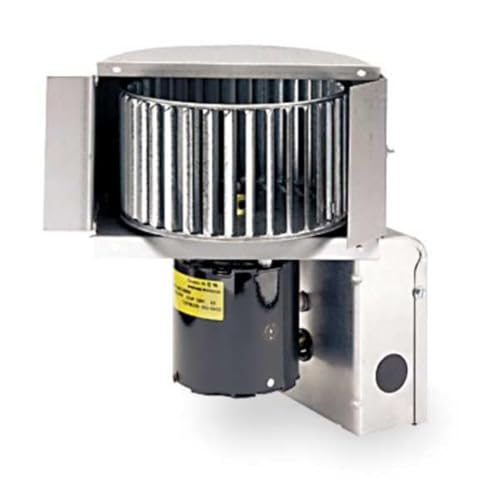
Best for general duct boosting where compatibility with a range of duct types matters. The DB-2 fits 5 to 8 inch round ducts and can handle shallow rectangular ducts as small as 3.25 inches, making it adaptable for many installations. It is rated to withstand temperatures up to 200F, which is useful in spaces with higher heat. Choose this if you need a flexible solution for various duct configurations.
Limitation: Performance and efficiency are highly dependent on duct layout and sealing; ensure ductwork is well sealed to avoid leaks that reduce effectiveness.
VIVOSUN 6 Inch Inline Duct Fan 240 CFM

Best for compact spaces needing steady ventilation with reliable performance. This VIVOSUN fan is built from durable metal and features a permanently lubricated bearing for low maintenance and quiet operation. With 240 CFM and a sturdy 6-inch diameter, it’s suitable for smaller basements, bathrooms, kitchens, and attics where space is limited but airflow is still essential. Consider this when you want a resilient, space-efficient option.
Limitation: Lower maximum airflow compared to larger 6-inch boosters; ensure it matches the required CFM for your space before purchase.
Buying Guide
What should I look for when choosing a duct booster fan?
- Airflow needs: Match CFM to the room size and duct length. Higher CFM helps in longer runs and more air exchanges.
- Power efficiency: Look for DC/EC motors for lower energy use and longer service life.
- Noise considerations: Check specifications such as decibel levels and mounting options to minimize disruption.
- Compatibility: Ensure the duct size (4″, 6″, etc.) and duct type fit your existing system; some models handle multiple duct types.
- Controls: Decide between basic on/off, speed controllers, or smart/APP-enabled controls for automation and scheduling.
- Installation ease: Consider whether quick-release blades, lightweight housings, or simple mounting hardware are important for your setup.
- Temperature tolerance: For spaces with high heat, confirm the unit’s temperature ratings.
FAQ
- Do booster fans require professional installation?
In many cases, normal home use can be installed by a confident DIYer, but complex duct layouts or high-heat areas may warrant pro installation. - Can booster fans reduce odors effectively?
Yes, by increasing airflow through the ductwork, they help remove odors more quickly from enclosed spaces. - What is the difference between 6-inch and 4-inch boosters?
A 6-inch model provides higher airflow for larger spaces; a 4-inch model fits tighter ducts with more modest airflow needs. - Are smart booster fans worth it?
Smart models offer automation and remote control, which can improve energy efficiency and convenience in larger or multi-room setups. - What maintenance is required?
Regular dusting of grilles and periodic inspection of mounting and wiring are typically sufficient; some models use sealed bearings for longer life. - Can booster fans be used with existing humid environments?
Yes, but ensure the unit can tolerate humidity and that ducts are sealed to prevent condensate issues.