Best Crawl Space Humidity Control Solutions for a Safer, Dryer Home
Looking to reduce moisture in your crawl space and improve overall indoor air quality? This guide highlights five top crawl space humidity control products, showing who they’re best for and how they work. Ideal buyers include homeowners managing basement dampness, renovated crawl spaces, or spaces prone to mold and wood rot. The selections emphasize dehumidistat-enabled controllers and vent/fan systems that regulate humidity and airflow for drier living spaces.
| Product | Best For | Key Benefit |
|---|---|---|
| Briidea Crawl Space Humidistat Controller | Small to medium crawl spaces | 2 control modes for flexible humidity management |
| CADPXS Crawlspace Ventilation Fan | Wet crawl spaces needing air exchange | Built-in humidistat with 220 CFM airflow |
| Large areas up to 4000 sq. ft. | High capacity dehumidification with pump option | |
| AC Infinity AIRTITAN T8 | Basements needing monitored ventilation | WiFi-enabled humidity control and scheduling |
| Tjernlund DH10 Crawlspace Dehumidistat | Legacy crawl space fans | Simple, reliable humidity control range |
Crawl Space Humidistat Controller, Briidea

The Briidea humidistat controller combines two operation modes: a dehumidistat mode and a thermostat plus dehumidistat control. It provides two plug-in outlets with individual on/off switches, enabling automatic ventilator activation when humidity rises above a set percentage and automatic shutoff below the target. The unit is designed to improve indoor air quality by limiting moisture and radon levels in the home, particularly benefiting homeowners seeking a compact, flexible solution for smaller crawl spaces. Best for users who want simple, hands-off humidity control with an option to combine temperature monitoring for broader comfort. Caution: data emphasizes safety with UL-listed power connections; verify compatibility with existing fans in your space.
Tjernlund DH10 Crawlspace Dehumidistat

The Tjernlund DH10 provides a straightforward dehumidistat control for crawl space exhaust fans. It adjusts from about 20% RH to 80% RH and is rated for up to 10 amps at 115 VAC. This option is best for users with existing crawl space fans who want a simple, reliable humidity threshold that activates or deactivates at set RH levels. Better for smaller, less complex spaces where a dedicated external control is preferred, though it may lack advanced scheduling or remote capabilities.
CADPXS Crawlspace Ventilation Fan
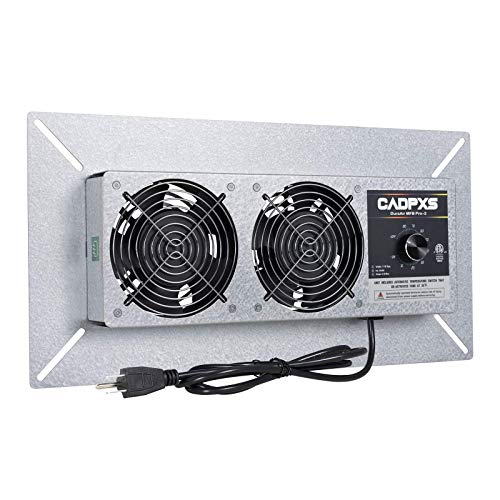
The CADPXS unit combines a 220 CFM crawlspace vent fan with a built-in humidistat ranging from 20% to 80% RH. It is designed to exchange outdoor and indoor air, improving room air quality and balancing humidity. An added freeze-protection thermostat prevents operation if outdoor temperatures are too low. This option is best for spaces needing continuous air exchange to address humidity and odor migration, especially in areas with radon concerns. Use this if you want active ventilation alongside humidity control; avoid if you need a compact, standalone dehumidifier without fan operation in cold conditions.
Aiusevo 75 Pints Crawl Space Dehumidifier

This commercial dehumidifier targets crawl spaces up to 4000 sq. ft., removing up to 75 pints per day under high humidity (95°F, 90% RH). It offers two drainage options: gravity drainage and a built-in pump with a 16.4 ft hose. It includes a compact footprint that fits between floor joists, making it suitable for tight crawl spaces, garages, and storage facilities. Best for spaces requiring high moisture removal and flexible drainage. Choose this if you need pump-assisted removal; consider a gravity-only setup if you have easy floor drain access and want a simpler system.
AC Infinity AIRTITAN T8

The AC Infinity AIRTITAN T8 is a venting system designed for crawl spaces and basements, creating exhaust airflow to reduce humidity and odors. It features dynamic programming for temperature, humidity, and vapor pressure deficit (VPD) with timers, cycles, scheduling, and a minimum speed setting. This option suits homes seeking automated, app-controlled ventilation with flexible programming. Best for users who want remote monitoring and control; better for spaces with existing ducting or where continuous air exchange is beneficial, but assess compatibility with your current HVAC setup.
EDH-1 Dehumidistat, Field Controls

The EDH-1 Dehumidistat is designed for use with the Eliminator crawl space fan and controls humidity in crawl spaces via a 120 VAC, 12 AMP rating. It operates over a range of 20% to 80% RH to trigger venting or fan operation. This option is best for users who already own an Eliminator fan or want a simple, dedicated humidity control solution without additional features. Consider this if you favor a straightforward, budget-friendly approach; it may lack advanced data readouts or remote control capabilities.
Buying Guide: Key Considerations for Crawl Space Humidity Control
- Space size and layout: Smaller crawl spaces benefit from compact humidistat controllers, while larger areas may need higher-capacity dehumidifiers or active ventilation with fans.
- Control type: Decide between dehumidistat-only, thermostat plus humidity control, or remote/app-enabled systems based on desired automation and monitoring.
- Drainage options: Choose between gravity drainage, built-in pumps, or pump-free designs depending on how water removal fits your space’s drains and setup.
- Humidity range and sensors: Look for devices with a clear RH range (e.g., 20%–80% or 20%–80% RH) and accurate sensing to prevent over-drying or under-drying.
- Ventilation vs. dehumidification: Some products emphasize active ventilation; others emphasize dehumidification. Evaluate which approach aligns with your moisture sources and radon concerns.
- Electrical safety: Confirm UL-listed components and compatibility with existing outlets and fans. Ensure proper wiring for safe operation in damp environments.
- Installation ease: Consider wall-mount controllers, inline fans, or plug-in options depending on your DIY comfort and access to crawl spaces.
- Remote monitoring: If ongoing monitoring matters, prioritize WiFi or remote-control options with data readouts and alerts.
Frequently Asked Questions
- What humidity level should I target in a crawl space? Aim for 30%–60% RH to minimize mold growth and wood rot, adjusting to climate and home comfort needs.
- Is a dehumidifier better than a humidistat controller? A dehumidifier removes moisture directly, while a humidistat controller manages humidity by activating fans or a dehumidifier as needed. Some setups combine both for best results.
- Can I install these devices myself? Many are designed for DIY installation, especially plug-in humidistat controllers. Complex wiring or electrical work should be done by a licensed professional.
- Do these devices work in cold crawl spaces? Some units include freeze-protection or temperature sensors; verify that the chosen model operates effectively in your climate.
- Will these solutions handle radon concerns? Some vented systems help reduce indoor moisture that can correlate with radon movement, but consult a radon mitigation professional for dedicated mitigation if radon is a concern.
- How do I choose between a vented fan and a dehumidifier? If you have high humidity with poor air exchange, a vented fan with a humidistat can help; for heavy moisture, a dedicated dehumidifier paired with a humidistat control may be more effective.