Best Built-in AC Unit for Home Cooling: Quiet, Efficient Options
If you’re shopping for a built-in style air conditioning solution, you want models that fit your space, stay quiet, and save energy. This guide highlights five top options that adapt to different rooms and uses. The best choices include wall-mounted units for larger living areas, compact window units for bedrooms, and inverter models that balance power with efficiency. Each product is described with who it’s best for, why it was selected, and any practical limitations to consider. This overview helps you compare performance, energy use, and installation needs at a glance.
Summary at a glance: the following table lists five suitable built-in style cooling options, with typical room fit and standout strengths.
- Frigidaire 12000 BTU Wall AC – Best for medium-to-large rooms up to 550 sq ft
- GE Window 5000 BTU – Best for small rooms and bedrooms
- GE Profile ClearView 10300 BTU – Best for living spaces needing quiet operation
- Frigidaire 5000 BTU Window – Best for compact rooms and tight spaces
- Midea 12000 BTU Window with Heat – Best for year-round comfort in larger spaces
Frigidaire 12,000 BTU Wall AC With Dehumidifier
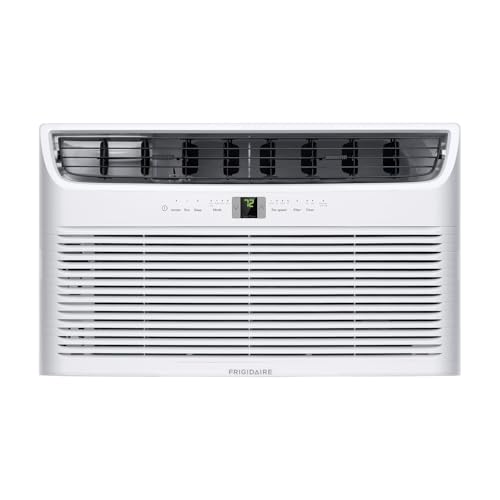
Best for: larger living rooms or open-plan spaces up to about 550 sq ft. This Frigidaire wall unit cools efficiently and adds dehumidification, which helps maintain comfortable humidity in warmer climates. It features a built-in air ionizer to improve air quality and a remote for convenient control from the couch. Three fan speeds let you tailor airflow to your space.
Why selected: The 12,000 BTU capacity meets larger room needs while staying energy-conscious in typical American homes. The remote control and multiple modes support flexible use. A potential limitation is that larger rooms may require professional installation or secure mounting in certain walls.
Caution: The ionizer helps air quality but should be kept clean to avoid reduced airflow over time.
GE Window Air Conditioner 5,000 BTU

Best for: small rooms, bedrooms, or home offices up to 150 sq ft. This GE unit emphasizes simple, mechanical controls with two cooling modes and two fan speeds. It’s noted as quieter than many older window units, improving overnight comfort without disruption.
Why selected: It provides straightforward operation without digital beeps and requires no Wi-Fi or app setup. It’s a solid pick for renters or spaces where you want a dependable unit with easy maintenance. Limitation: lacks smart features, which may be a drawback for those seeking app control.
Caution: Mechanical controls can be less precise than digital thermostats for exact temperatures.
GE Profile ClearView Inverter Window AC – 10,300 BTU
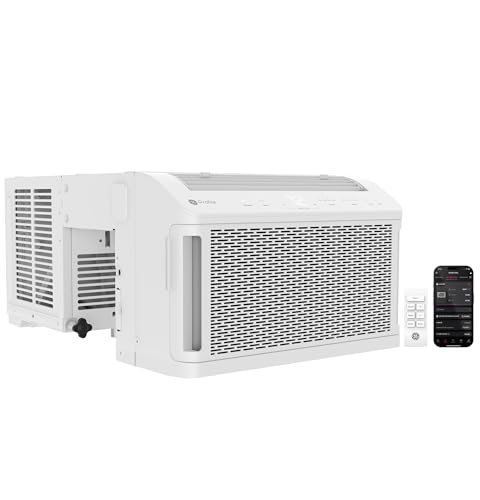
Best for: medium-to-large rooms up to 450 sq ft where quiet operation and window visibility are important. The full window view is a standout feature, maintaining natural light while cooling, and it uses inverter technology for smoother performance and energy efficiency.
Why selected: Inverter technology reduces noise and optimizes energy use, which is ideal for living rooms or open spaces. It’s designed for quieter operation and better long-term efficiency. Limitation: higher upfront complexity and price compared to basic window units.
Caution: The unit requires a compatible window size and proper installation to preserve window clearance and view.
Frigidaire 5,000 BTU Window AC

Best for: compact bedrooms or single rooms up to 150 sq ft. This unit offers a compact footprint with remote control, eco mode, and multiple fan speeds for basic, reliable cooling.
Why selected: It suits small spaces where installation space is limited and simple operation is preferred. Limitation: lower BTU means it won’t effectively cool larger areas; best for small rooms only.
Caution: Energy savings depend on insulation and room exposure; ensure proper sealing around the window for best efficiency.
Midea Inverter Window AC with Heat – 12,000 BTU

Best for: larger rooms up to 550 sq ft and year-round comfort, offering cooling and heating with intelligent control. This Energy Star-rated unit features inverter technology for energy efficiency and WiFi-smart control options via app, voice assistants, and remote control.
Why selected: It combines powerful cooling with supplemental heating, useful for transitional seasons. The inverter technology helps maintain stable temperatures with lower energy use. Limitation: heat function may be restricted at very low outside temperatures or require specific operating conditions.
Caution: App and smart features require setup and compatible devices; ensure your home network supports the required protocols for remote control.
Buying Guide: Built-In AC Unit Considerations
What room size is ideal for each unit?
BTU rating should align with room size. Larger rooms benefit from higher BTUs (12,000 BTU range), while small bedrooms typically need 5,000 BTU. Inverter models offer smoother cooling and better efficiency for mid-to-large spaces.
Do you want smart features or simple controls?
Smart-enabled units provide app, voice, and remote control capabilities, which can be convenient for multi-room homes. If you prefer a straightforward, no-fuss setup, mechanical controls are reliable and easy to use.
Which installation type fits your space?
Wall-mounted and window units have different installation requirements. Wall units are ideal for larger, open rooms with appropriate wall space, while window units fit many apartments and rooms without structural changes. Ensure window depth and sill clearance match unit specifications.
How important is energy efficiency?
Energy Star-rated models, especially in inverter form, reduce operating costs over time. If you expect extended cooling seasons, invest in an efficient inverter model to lower energy consumption while maintaining comfort.
What are potential limitations to watch for?
Higher BTU units require proper space and venting; some units lack smart controls or have limited compatibility with home networks. Noise levels vary by model, with some premium inverter units offering ultra-quiet operation.
Maintenance and filters
Regular filter cleaning and occasional maintenance extend unit life and air quality. Look for units with washable or long-life filters and intuitive reminders for filter cleaning.
Compatibility and installation notes
Review window dimensions and wall structure before purchasing a built-in style unit. Some models require professional installation for safe mounting, electrical connections, and proper drainage in portable options.
Choosing the right model at a glance
- Best for larger living spaces: Frigidaire 12,000 BTU Wall AC
- Best for small rooms without smart features: GE Window 5,000 BTU
- Best for quiet operation and window visibility: GE Profile ClearView 10,300 BTU
- Best for compact spaces: Frigidaire 5,000 BTU Window
- Best for year-round comfort and energy efficiency: Midea Inverter 12,000 BTU
Frequently Asked Questions
- What is the difference between window and wall-mounted AC units? Answer: Window units sit in (and block part of) a window opening, while wall-mounted units are installed through a wall, typically requiring professional installation for larger models.
- Do inverter AC units save energy? Answer: Yes. Inverter technology adjusts compressor speed for continuous cooling, often reducing energy use compared with fixed-speed units.
- Is higher BTU always better? Answer: Not necessarily. An oversized unit wastes energy and can create humidity and temperature swings; match BTU to room size and insulation.
- Can I install a built-in style unit myself? Answer: It depends on the model and space. Some window units are DIY-friendly, while wall-mounted systems may require professional mounting and electrical work.
- Do these units require special maintenance? Answer: Regular filter cleaning and periodic servicing help maintain efficiency and air quality. Follow manufacturer guidelines for cleaning intervals.
- What features should I prioritize? Answer: Prioritize cooling capacity, energy efficiency (Energy Star or inverter), quiet operation, and control options (remote or smart app) based on room use.