Best Bubble Wrap Insulation for Ductwork: A Practical Buyer’s Guide
If you’re looking to reduce energy loss around ductwork, bubble wrap insulation offers a lightweight, easy-to-install solution. This guide highlights five versatile options that suit DIY projects, small commercial spaces, and temporary or permanent insulation needs. The top picks are best for homeowners, contractors, and improver projects where radiant heat and temperature stabilization are important concerns.
| Product | Best For | Key Benefit |
|---|---|---|
| UBmove USA Reflective Insulation Bubble Roll 48″ x 125′ | Garage, greenhouse, and construction projects | Thick 3/16″ bubble layer with foil for insulation |
| Double Bubble Reflective Foil Insulation Tape (4″) | Air ducts, AC hoses, and small joints | Easy one-person installation with adhesive backing |
| US Energy Products 48″ x 100′ White Double Bubble | Attics, garages, metal buildings | High reflectivity and durable double bubble design |
| EcoFoil Double Bubble Insulation Roll 48″ x 75′ | Residential and light commercial projects | Lightweight, easy to cut, effective radiant barrier |
| Reflectix BP24025 24″ x 25′ Bubble Pack | Crawl spaces, walls, and small areas | Multi-layer aluminum foil with bubble cushion |
UBmove USA Reflective Insulation Bubble Roll 48″ x 125′

Best for large duct runs, this roll combines a 3/16 inch bubble layer with a foil outer layer to cushion and insulate. Its temperature stabilization helps reduce heating and cooling loads in workshops, basements, and utility areas. The product is made in the USA and suitable for garages, greenhouses, and general insulation projects.
Who it’s for: homeowners tackling attic or garage projects and small contractors seeking a versatile barrier.Why selected: high bubble depth and foil bonding provide durable thermal resistance in a single-sheet solution.
Caution: the roll is bulky; handling and cutting may require a utility knife and a stable workspace.
Double Bubble Reflective Foil Insulation Tape (4″)

Best for spot insulation on ducts and hoses, this adhesive-backed tape simplifies one-person installation. It provides an overlapping seal to prevent heat loss around joints and exposed pipes. The product uses a double-bubble design to reduce heat transfer in challenging gaps.
Who it’s for: DIYers focusing on patchwork or retrofit projects.Why selected: adhesive backing enables quick, clean installation without extra tools. Caution: width options are limited; larger ducts may require wider tape.
US Energy Products 48″ x 100′ White Double Bubble

Best for energy-conscious spaces, this white double-bubble insulation reflects up to 97% of radiant heat. It supports cooling in summer and warmth in winter, making it suitable for garages, attics, and metal buildings. The heavy-duty design enhances durability and thermal resistance.
Who it’s for: property owners seeking a robust radiant barrier for larger spaces.Why selected: high reflectivity translates to meaningful energy savings over time. Caution: installation may require careful alignment to avoid gaps in coverage.
EcoFoil Double Bubble Insulation Roll 48″ x 75′
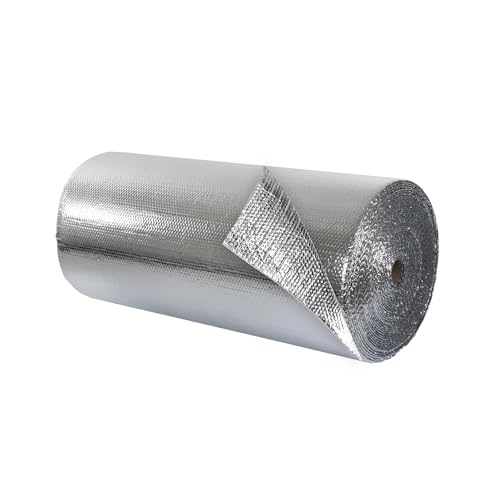
Best for easy handling and straightforward cuts, this roll weighs less and installs quickly on walls, attics, or ductwork. The foil-to-bubble construction delivers strong thermal resistance and blocks radiant heat in both winter and summer. It’s made in the USA and designed for broad compatibility with residential spaces.
Who it’s for: budget-conscious renovators and weekend installers.Why selected: balance of light weight and effective reflection. Caution: as with any roll, ensure clean, dry surfaces for best adhesion and seal.
Reflectix BP24025 24″ x 25′ Bubble Pack

Best for smaller or constrained spaces, this seven-layer insulation uses aluminum foil to reflect heat while a bubble layer provides cushioning. Its fiber-free composition makes it suitable for crawl spaces, attics, and walls where a compact solution is needed. The multi-layer design supports consistent thermal performance.
Who it’s for: remodelers working in tight spaces or projects that require precise fit.Why selected: proven multi-layer structure delivers reliable thermal resistance in a compact form. Caution: length is modest; may require multiple rolls for larger jobs.
Buying Guide
- What size do you need? Choose a width and length that matches the duct diameter and run length. Wider rolls can reduce seams, while longer lengths minimize joints.
- How thick should the insulation be? Bubble height (thickness) affects thermal resistance. Deeper bubbles offer more cushioning and insulation but may be harder to handle.
- What about reflective value? Foil-backed products reflect radiant heat well. Higher reflectivity often equates to greater energy savings in sun-exposed spaces.
- Is adhesive backing important? Self-adhesive options simplify installation and reduce the need for tools. For porous or dusty surfaces, consider additional tape or fasteners.
- Durability and fire safety? Look for Class A/1 fire ratings and non-toxic compositions if installed in living or working spaces.
- Application environment? For garages, attics, and greenhouses, consider exposure to moisture; some products are water-resistant while others are not.
FAQ
Q: Can bubble wrap insulation be used directly on ductwork? A: Yes, especially products designed for ducts or with adhesive backing. Ensure a tight wrap with no gaps.
Q: Is reflective insulation better than non-reflective? A: Reflective foil adds radiant heat reduction, useful in hot environments; non-reflective may still provide good insulation via bubble layers alone.
Q: How do I cut bubble wrap insulation? A: Use a sharp utility knife or scissors for clean edges; cut on a stable surface and wear gloves to protect your hands.
Q: Do these products require professional installation? A: Most DIY-friendly options are designed for single-person installation, but larger projects may benefit from an extra pair of hands.
Q: Are these products safe for living spaces? A: Choose products with appropriate fire ratings and non-toxic composition for spaces with occupants.