Best Automatic Duct Booster Fans for Efficient HVAC Boost
Searching for an automatic duct booster fan helps improve HVAC performance with minimal effort. This guide highlights five top options, suited for different spaces and needs. Choose based on ease of use, control features, and energy efficiency. The top picks cater to residential rooms, grow spaces, bathrooms, and attics where constant airflow matters.
| Product | Best For | Key Benefit | Notes |
|---|---|---|---|
| AC Infinity Automatic Duct Fan 4″ | Smart, hands-off airflow balancing | Automatic activation via differential pressure switch | Ideal for variable duct runs |
| Howeall Smart Register Booster | Homes needing app control | Dual intelligent thermostat with WiFi app | Automatic scheduling and remote control |
| Hon&Guan 6″ Inline Booster | Quiet, energy-efficient boosting | Low power, high airflow (345 CFM) | Great for vents and grow spaces |
| AC Infinity CLOUDLINE PRO T6 | Hydroponics or climate-controlled rooms | Temperature, humidity, and VPD control | WiFi app with advanced programming |
| VIVOSUN 6″ Inline Exhaust Fan | Budget-friendly, versatile use | 345 CFM, EC motor, low noise | Good general-purpose booster |
AC Infinity Automatic Duct Fan 4″ — Smart Boost

Best for spaces requiring automatic regulation without manual intervention. This inline duct fan activates when a differential pressure switch detects a change, helping maintain consistent heating or cooling delivery. It is suitable for duct runs where manual adjustments are impractical and directional airflow varies by setup.
Who it’s for: homeowners or technicians seeking a plug-and-play booster with automatic control. Why selected: its differential pressure switch offers reliable, in-line activation in multiple orientations, reducing the need to tweak settings constantly.
Limitations: mounting position may influence response time; ensure proper wiring and placement per installation guidelines.
Howeall Super Quiet Register Booster Fan

Best for homes needing precise, app-enabled control of room-to-room air movement. This 4″ x 10″ booster fits standard register openings and supports WiFi app control for remote operation. It includes dual intelligent thermostat functionality to adjust airflow with temperature changes.
Who it’s for: tech-savvy homeowners wanting remote scheduling and weather-responsive operation. Why selected: the dual control and smart programming help maintain even temperatures while saving energy.
Limitation: requires stable WiFi for full app features; local button control is available but may be less convenient in distant rooms.
Hon&Guan 6 Inch Inline Booster

Best for high-throughput, low-noise duct boosting. This 6-inch inline booster delivers up to 345 CFM with a low power draw (19.2W). It’s designed for quick installation and can quietly move air through grow rooms, bathrooms, kitchens, and attics.
Who it’s for: users needing a powerful yet energy-conscious option for large or multiple vent paths. Why selected: strong airflow with relatively low energy use makes it versatile for many applications.
Limitation: sensitive to duct size compatibility; confirm your duct diameter and mounting space before purchase.
AC Infinity CLOUDLINE PRO T6
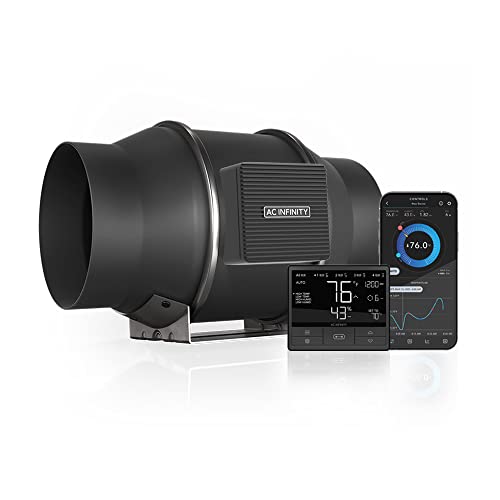
Best for climate-controlled spaces and grow environments requiring programmable ventilation. The T6 combines a quiet EC motor with a temperature and humidity controller, plus WiFi integration for advanced automation. It helps regulate heating, cooling, and odor control in one system.
Who it’s for: growers, AV setups, or rooms needing coordinated climate control. Why selected: its robust programming and cloud connectivity support complex schedules and data logging.
Caution: advanced features require setup and compatible UIS controllers or apps; novice users may need time to learn the interface.
VIVOSUN 6″ Inline Exhaust Fan

Best for budget-conscious buyers needing solid airflow and low-maintenance operation. This 6″ inline fan delivers up to 345 CFM with an EC motor for energy efficiency and relatively quiet performance, making it suitable for grow tents, basements, or workshops.
Who it’s for: users seeking reliable, mid-range airflow without premium pricing. Why selected: strong performance at a lower price point, with practical compatibility across vent sizes.
Limitation: as with many inline fans, duct compatibility and mounting must be verified to avoid leaks or noise amplification.
Buying Guide: How To Choose The Right Automatic Duct Booster Fan
What space are you boosting?
Small rooms benefit from compact 4″ units with auto-sensing features, while larger basements or grow spaces may require 6″ models with higher CFM ratings and programmable controllers.
What control features matter?
Automatic differential pressure switches, thermostats, or humidity sensors can reduce manual adjustments. WiFi app control enables remote management, scheduling, and data logging for energy savings.
How important is energy efficiency?
Look for EC motors or low wattage ratings. A higher CFM does not always mean better efficiency if it spikes energy use. Compare wattage to airflow to estimate operational cost.
Is installation complexity a factor?
Consider duct diameter compatibility, mounting position, and whether you need a plug-in switch or hardwired setup. Some units offer easier in-duct mounting and fewer wiring steps.
What are potential limitations to expect?
Smart features rely on stable wiring and network connectivity. Some products require specific controllers or apps, which may affect future compatibility with other devices.
Summary of Key Buyer Considerations
- Automatic activation is ideal for variable duct runs and maintaining consistent temperatures.
- 6″ models generally move more air but require larger ducts and mounts.
- Smart controls offer convenience but verify app compatibility and setup requirements.
- Energy efficiency should be weighed against airflow needs and noise tolerance.
FAQ
- What is an automatic duct booster fan? A fan installed in a duct system that starts or speeds up automatically based on pressure, temperature, or humidity triggers.
- Do these fans reduce energy bills? Yes, by optimizing airflow and reducing the need for manual adjustments, they can save energy in the long term.
- Can I install these myself? Many are designed for straightforward DIY installation, but some units require electrical wiring or professional help.
- Which control method is best? Choose based on your needs: differential pressure switches for automatic activation, thermostats for temperature-based control, or apps for remote management.
- Are EC motors worth it? EC motors are generally more energy-efficient and quieter than traditional AC motors, especially at partial loads.
- How do I pick the right size? Match the duct diameter and desired CFM to the space’s airflow requirements and available mounting space.