Best Air Handler Drip Pan Solutions for Leak-Proof HVAC Rooms
When selecting an air handler drip pan, the right choice depends on your system’s size, material needs, and whether you prioritize seamless design or heavy-duty durability. This guide highlights five solid options for American homes and small commercial setups, focusing on plastic and metal pans designed to prevent condensate leaks and floor damage. Ideal buyers: condo or apartment HVAC maintainers may prefer plastic pans; single-room units and garages benefit from stainless or galvanized steel pans, while larger setups may need wider pans with optional hole configurations. The summary table below helps you compare key points at a glance.
| Product | Material | Best For | Notable Feature |
|---|---|---|---|
| Diversitech 6-2748L | Plastic ABS | Light-duty residential systems | Seamless design with rolled edges |
| Diversitech 6-2763L | ABS | Wider, longer pans for condensate | Long side outlet with PVC fitting |
| Diversitech 6-2626L | Plastic ABS | Compact, large-capacity plastic pan | Seamless, durable construction |
| Heavy Duty 304 Stainless Steel Pan | 304 Stainless Steel | High-traffic areas, durability required | Includes drain hose option |
| Heavy-Duty Galvanized Steel Pan (26″x48″x2″) | Galvanized steel | Customizable with or without holes | Versatile sizing and hole options |
Diversitech 6-2748L A/C Secondary Plastic Condensate Drain Pan

The Diversitech 6-2748L is a 27″ x 48″ plastic drain pan made from non-toxic ABS plastic with rolled edges and ribbed bottom. It is designed to collect condensate from cooling and evaporator coils and is seamless to prevent leakage and rust over prolonged use. Best for: light-to-mid residential HVAC installations where ease of installation and leak prevention are priorities. Caution: ensure the pan size matches the evaporator footprint to avoid overflow in tight spaces.
Diversitech 6-2763L A/C Secondary Condensate Drain Pan

Measured at 27″ x 63″ with an overall footprint of 29″ x 65″ and a 2″ depth, this pan includes a 3/4″ PVC discharge fitting and is vacuum-formed from ABS plastic. Best for: longer or wider HVAC coil configurations that need more condensate capacity and a dedicated discharge line. Limitation: ensure compatible ductwork and space for the longer pan to avoid installation interference.
DiversiTech (6-2626L) A/C Secondary Plastic Condensate Drain Pan
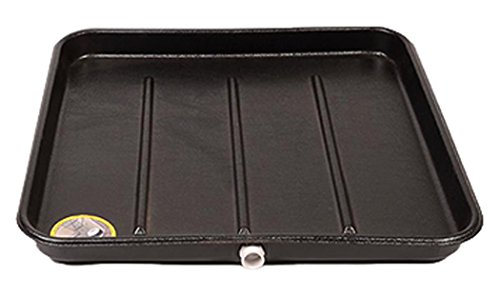
This 26” x 26” plastic drain pan uses seamless ABS construction with rolled edges and reinforced corners. Best for: compact or modular HVAC setups where space is limited but durability remains essential. Caution: confirm the depth and edge dimensions fit your cabinet or enclosure to prevent fit issues.
Heavy-Duty Galvanized Steel Drain Pan

This premium galvanized steel pan measures 26″ x 48″ with a 2″ depth and offers customizable hole options. Best for: environments that require tougher metal pans with optional pre-drilled holes for flexible drainage. Limitation: galvanized steel can be heavier and may require more robust mounting hardware and support.
Heavy-Duty 304 Stainless Steel HVAC Drain Pan

The 304 stainless steel pan provides robust durability for high-traffic areas and can accommodate a heavy condensate load. Best for: garages, workshops, or commercial spaces where leaks must be prevented under constant use. Caution: stainless pans can be more expensive and require proper mounting to avoid vibration or warping.
Buying Guide: Key Considerations For Air Handler Drip Pans
What material should you choose? Plastic ABS pans are lightweight, seam-free, and corrosion-resistant, making them a solid choice for standard residential units. Stainless steel pans offer superior durability and leak resistance in busy or high-condensation environments. Galvanized steel pans balance strength and cost but may require more sturdy mounting. What size do you need? Match the pan dimensions to the evaporator coil footprint and available space. How is drainage managed? Look for built-in discharge fittings or compatible hose connections to ensure reliable condensate flow. Should you consider hole options? Some pans offer pre-drilled holes to align with drainage lines; choose this if your installation requires precise outlet positioning. What about installation and maintenance? Seek pans with reinforced corners and rolled edges to resist deformation and leaks, and ensure the surface is easy to clean to prevent mold growth. Do you need a silent or low-profile option? Some pans have low profiles or ribbed bottoms that minimize condensate pooling and noise. How will climate and location influence choice? In humid regions or basements, robust pans with larger capacities reduce the risk of overflow during peak operation.
FAQ
- What is an air handler drip pan? A tray placed beneath an air handler or evaporator coil to collect condensate and prevent water damage from leaks.
- Which material is best for residential use? Plastic ABS pans are popular for light-to-mid residential use due to ease of installation and corrosion resistance.
- Can a pan have holes? Yes. Some pans offer pre-drilled holes to align with drainage lines, aiding installation flexibility.
- When should I upgrade to stainless steel? In high-traffic or high-condensation environments where durability and long-term leak prevention are priority.
- Do pans affect system efficiency? Indirectly; a well-sealed, properly sized pan prevents leaks that could impact surrounding equipment and flooring, preserving system efficiency.
- Is a larger pan always better? Not always. Size should match your evaporator footprint and drainage capacity to avoid overflow or mounting issues.