Best Air Exchangers for Homes: Top Ventilation Solutions for Clean Indoor Air
Answer: For homes seeking improved indoor air quality with energy-efficient ventilation, these five air exchangers deliver balanced fresh air, heat recovery, and quiet operation. They suit single rooms, small-to-mid sized homes, and retrofit projects where ductwork is limited. The top picks below are ideal for buyers prioritizing energy savings, simple installation, and smart control. A quick product table follows to help you compare key features at a glance.
| Product | Best For | Key Benefit |
|---|---|---|
| Weiworld Heat Recovery Ventilator with Ceramic Heat Exchanger | Single Rooms or small living spaces | High-efficiency ceramic core recovers up to 90% heat |
| Broan B210E75RS AI 206 CFM ERV | Energy-conscious homes needing auto-balancing | VIRTUO airflow verification and auto-balancing |
| Aprilaire V22BEC ERV | Mid-to-large homes seeking balanced airflow | Balanced exchange with energy recovery core |
| Weiworld Through Wall HEPA Ventilation Fan | Quiet, filtered fresh air in bedrooms or offices | 3-stage filtration and true fresh air exchange |
| VENTS TwinFresh Comfo RB1-50-2 | Small rooms or retrofit through-wall ERV | Energy recovery with compact, ductless installation |
Weiworld Heat Recovery Ventilator With Ceramic Core
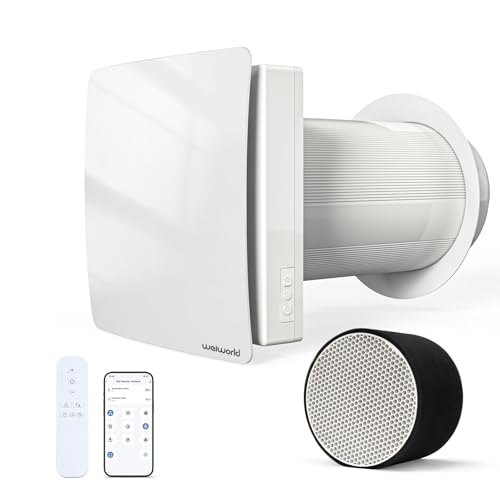
The Weiworld HRV is best for single-room ventilation where heat recovery matters. Its ceramic heat exchanger recovers up to 90% of energy from exhaust air, helping to lower heating costs while improving indoor air quality. The unit supports smart control via Tuya App and remote, making it suitable for tech-friendly homes or spaces like a home office or attic bedroom. It offers three airflow modes: Fresh Air, Exhaust, and Recirculation to tailor comfort.
Best for: buyers prioritizing high heat-recovery efficiency in a single room or small space. Choose this if you want remote control and flexible modes. A potential limitation is that performance depends on installation height and room sealing; ensure proper ducting for optimal results.
Broan B210E75RS AI 206 CFM ERV

This Broan unit is best for homes that want automatic airflow verification and auto-balancing. VIRTUO technology reduces installation guesswork by verifying airflow and maintaining the initial configuration across different dwelling types. It combines supply and exhaust with a tempered, filtered outdoor air supply to improve overall IAQ. It’s well-suited for homes undergoing energy upgrades where consistent performance is valued.
Best for: buyers who want hassle-free balance and predictable performance. Limitation: advanced features may require compatible setup and routine maintenance to preserve auto-balancing efficiency over time.
Aprilaire V22BEC Energy Recovery Ventilator

The Aprilaire V22BEC is best for mid-to-large homes needing balanced air exchange with an energy recovery core. It replaces stale indoor air with fresh outdoor air, improving overall IAQ. The ERV design tempering incoming air with exhaust air helps maintain comfortable humidity and temperature without excessive HVAC load. It suits retrofits where wall, ceiling, or floor mounting is feasible.
Best for: buyers seeking a balanced, energy-saving solution for larger spaces. Caution: ensure proper sealing and outdoor air consideration in highly humid climates to maximize benefits of the energy recovery core.
Weiworld Through Wall HEPA Ventilation Fan
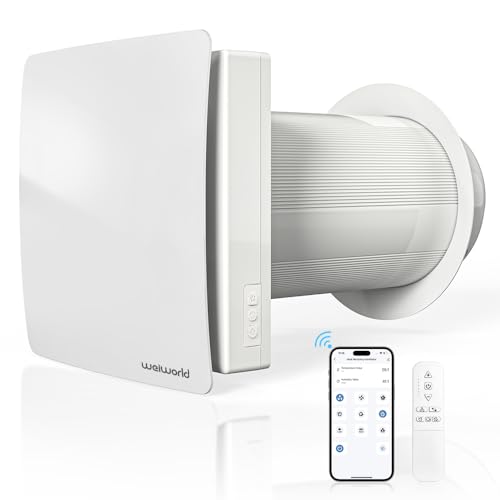
This unit is best for bedrooms or home offices needing cleaner intake air and continuous fresh air exchange. It features a 3-stage filtration system including a HEPA filter and activated carbon to reduce dust, pollen, and odors. Smart WiFi control via Tuya App lets you switch between fresh air intake, exhaust, and circulation modes, supporting flexible daily use in smaller rooms.
Best for: buyers who want clean air with filtration and app-based control. Limitation: it may not move as much air as larger ERVs in bigger spaces; check room size against unit CFM capabilities.
VENTS TwinFresh Comfo RB1-50-2

The TwinFresh Comfo RB1-50-2 is best for through-the-wall, ductless ERV installations in smaller rooms or retrofit projects. It provides up to 30 CFM of fresh air while recovering up to 88% of heat or cooling from outgoing air. Its compact design and reversible DC motor allow quiet operation and flexible placement, ideal for bedrooms, basements, or home offices with limited space.
Best for: buyers needing a compact, ductless ERV with humidity sensing and energy recovery. Caution: throughput is limited in very large living areas; match room size with CFM expectations for effective ventilation.
Buying Guide: How To Pick The Right Air Exchanger
- Room size and coverage: Match unit CFM or energy recovery power to the area you need to ventilate. Larger homes benefit from ERVs or HRVs with higher airflow and balanced exchange.
- Energy recovery efficiency: Look for a high heat or energy recovery rate (percent) to reduce HVAC load. Ceramic cores and advanced ERV cores typically deliver stronger performance.
- Filtration and air cleanliness: If filtration matters, select models with HEPA or staged filtration to reduce dust, pollen, and odors before air distribution.
- Installation type: Consider through-wall, wall-mounted, ceiling-mounted, or ducted options. Ductless designs suit retrofit projects without extensive ductwork.
- Smart controls: Apps and remote control simplify scheduling, humidity adjustment, and mode switching. Check compatibility with your smart home setup.
- Noise and comfort: Quiet operation is important for bedrooms and study areas. Review motor type and decibel ratings where available.
- Maintenance needs: Some units require filter replacement or occasional cleaning. Plan for accessible filter access and replacement intervals.
- Climate considerations: In humid climates, ERVs can help manage humidity better; in very dry climates, prioritizing heat exchange efficiency can improve comfort.
Frequently Asked Questions
- What is an air exchanger used for in a home?
It brings in fresh outdoor air while expelling stale indoor air, often with heat or energy recovery to reduce HVAC demands.
- What’s the difference between an HRV and an ERV?
HRVs focus on heat transfer with exhaust air, while ERVs also manage humidity, tempering both incoming and outgoing air.
- How many CFM should I choose for a room?
Choose based on room size and expected occupancy; typical guidelines range from 15 to 60 CFM per room, depending on use.
- Are through-wall ERVs easy to install?
They can be retrofit-friendly but require careful mounting and sealing; professional installation is advised for best results.
- Do I need filtration on an air exchanger?
Filtration reduces dust and odors. Models with HEPA or activated carbon filters offer cleaner air, especially in dusty or smog-prone areas.
- Can these systems reduce my energy bills?
Yes, by recovering heat or conditioning incoming air, they can reduce heating or cooling loads, particularly in tightly sealed homes.