Best Air Ducts and Vents Cleaning Tools for Homeowners
Get the right tools to clean dryer vents and air ducts efficiently. This guide highlights five top options suited to homeowners, renters, and DIY enthusiasts alike. Each product helps remove lint, dust, and odors, improving airflow and potentially reducing fire risk. Read on to find the best fit for your vent system, from drill-powered kits to high-velocity pneumatic cleaners.
Quick Buying Summary
| Product | Best For | Key Benefit | Limitations |
|---|---|---|---|
| Holikme 35Feet Dryer Vent Cleaner Kit | Comprehensive kit for 4-inch ducts | All-in-one set with drill attachment | Requires drill for operation |
| Sealegend 58-Pieces 35-Feet Kit | Deep cleaning with multiple tools | Includes vacuum attachments and adapters | Many parts may be overwhelming |
| Gardus RLE202 LintEater Rotary Kit | Rotary cleaning to extend vent reach | Extends up to 12 feet with rods | Some setup steps required |
Holikme 35Feet Dryer Vent Cleaner Kit

This all-in-one kit targets 4-inch dryer vent ducts. It includes a heavy-duty dryer vent brush, a set of flexible nylon rods, a dedicated lint brush, a drill attachment, and protective gloves. Best for homeowners who want a complete package in one box and plan to use a power drill for deep cleaning. A key limitation is reliance on a standard drill for operation, which may not suit all users.
Who it’s best for: Homeowners who want a ready-to-use kit that covers brushing, lint removal, and drill-assisted deep cleaning in one purchase.
HeliumX High-Pressure Dryer Duct Cleaner Kit

This kit uses high-velocity compressed air instead of mechanical bristles for deep, thorough cleaning. It features a 23-foot integrated line with a rigid nozzle mounted to a hose, reducing the risk of loose parts. Best for users who want a robust pneumatic solution to avoid component wear. Limitation: may require compatible air supply and setup knowledge.
Who it’s best for: DIYers seeking a non-bristle, air-powered method to blast lint from long duct runs.
Gardus RLE202 LintEater Rotary Kit

Gardus’ Rotary Kit provides an easy drill-attached cleaning system designed to extend vent cleaning reach up to 12 feet with four flexible rods. It includes adapters to pair with a vacuum or air source. Best for users who want a trusted rotary approach and a long reach. Limitation: setup takes time and may require frequent rod handling during use.
Who it’s best for: Homeowners needing a proven rotary tool for mid-to-long vent runs, with compatible vacuum or air connections.
SWKTPP 4 Pieces Dryer Vent Cleaner Kit

This four-piece kit focuses on multi-purpose cleaning, including a flexible vent brush and an appliance brush for lint traps and coils. Best for households seeking an affordable, compact option to clean dryer vents and related components. Caution: the kit’s flexibility is good for tight spaces but may require careful navigation in longer vents.
Who it’s best for: Shoppers who want a simple, cost-effective kit for basic vent and lint trap cleaning.
Sealegend 58-Pieces 35-Feet Kit
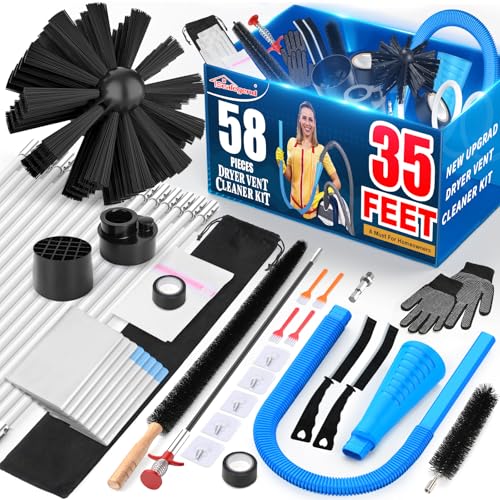
This all-in-one set spans 35 feet with a comprehensive mix: a 35-foot dryer vent brush, vacuum attachment, lint trap and multiple adapters, drill bits, and gloves. Best for users who want long-reach cleaning and multi-tool versatility in one package. Limitation: the breadth of parts can be overwhelming for first-time users.
Who it’s best for: DIYers who need a full toolkit to clean long vent runs and connect to different vacuum or air devices.
Buying Guide: Key Considerations For Air Ducts And Vents Cleaning
- Vent length and diameter: Choose a kit that matches your duct size and reach. Longer kits with multiple rods are ideal for longer runs, while compact sets work well for short, accessible ducts.
- Power source compatibility: Drill-powered sets work well for stiff brushing, but pneumatic or manual options may suit homes without easy drill access.
- Tool versatility: Look for kits that include adapters for vacuums or air sources, to enable debris capture and maximize cleaning effectiveness.
- Ease of use: Consider how easy the kit is to assemble, attach, and maneuver in tight spaces. Clear instructions help reduce setup time.
- Lint containment: Systems with dedicated lint attachments or vacuum compatibility help prevent secondary messes and improve safety.
- Fire risk reduction: Regular lint removal can lower the chance of dryer-related fires. Prioritize tools designed to remove stubborn blockages rather than merely surface lint.
Frequently Asked Questions
- What is the best method to clean a dryer vent? A kit that combines brushing with a vacuum or air-assisted method typically provides thorough cleaning and lint collection.
- How often should dryer vents be cleaned? Homeowners should inspect and clean vents when they notice longer drying times or reduced airflow, typically every 1–2 years depending on usage.
- Can I use any vacuum with a vent cleaning kit? Most kits include adapters compatible with common vacuums, but check compatibility before use to ensure a secure fit.
- Are pneumatic tools safer for vent cleaning? Pneumatic systems avoid bristle wear and can provide deeper cleaning in some ducts, though they require an air source and proper setup.
- Will cleaning vents improve energy efficiency? Yes, removing lint and obstructions reduces airflow resistance, potentially shortening drying times and lowering energy use.
- What signs indicate a risky vent condition? Excessive lint buildup, musty odors, or visible fire risk are indicators to perform a thorough cleaning or seek professional help.