Best Air Conditioning Duct Dampers for Precise Airflow Control
Installing the right duct damper helps balance airflow, prevent backdraft, and optimize HVAC efficiency. This guide highlights five strong options across sizes, materials, and mounting styles to fit common residential and small commercial systems. Best for DIY installers seeking durable construction, easy manual adjustment, and reliable sealing. Each product section explains who it’s best for and why it’s a solid pick, along with practical cautions to consider during installation.
| Product | Size / Type | Best For |
|---|---|---|
| ZOWZEA 2Pack 8″ Duct Dampers | 8″ stainless steel, manual | Humid environments; long-term durability |
| MIVIDE 4″ Backdraft Damper | 4″ galvanized with stainless axle | Range hoods and bathrooms; compact spaces |
| Therwen 6″ Backdraft Damper | 6″ galvanized sleeve | Simple air balancing in multi-branch runs |
| TOP-VIGOR 8″ Duct Damper | 8″ galvanized iron; manual | Durable, accessible control |
| Kikerike 4″ Draft Blocker | 4″ galvanized steel; aluminum flap | Inline ducting; basic backflow prevention |
ZOWZEA 2Pack 8″ Duct Dampers

The ZOWZEA dampers are built entirely from stainless steel for both the body and flap, emphasizing corrosion resistance and durable performance in humid environments. A manual adjustment handle lets you tailor airflow to maintain comfort and prevent backdraft. A rubber edge seal enhances airtightness for quiet, smooth operation. Best for homes or spaces where moisture is a concern and longevity matters. Caution: stainless steel can be heavier and may require sturdy mounting in larger ducts.
MIVIDE 2Pack 4 inch Backdraft Dampers

These MIVIDE dampers are sized for 4-inch ducts and use galvanized steel with stainless steel axles and a robust spring. They’re easy to install by inserting into the duct, with a horizontal spring alignment for optimal opening and closing. Best for compact duct runs such as range hoods or bathroom exhausts where dependable one-way airflow is needed. Limitation: smaller diameter means suitability is limited to 4-inch openings.
Therwen Backdraft Damper Duct (2 Pcs, 6 Inch)
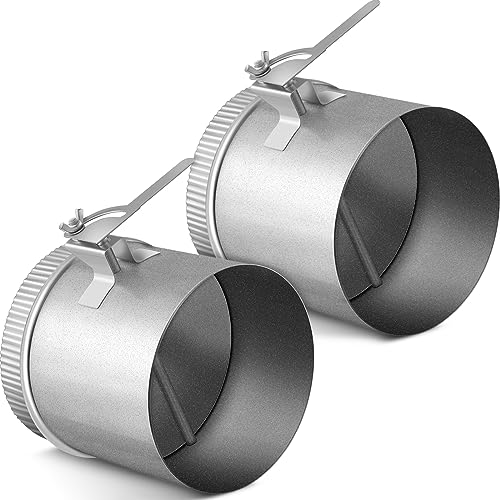
Therwen offers a 6-inch manual damper wrapped in a galvanized sleeve, designed for air balancing across branches. It’s straightforward to install—insert, screw, and seal connections to minimize leaks. Best for multi-branch layouts where each path needs adjustable control. Caution: not a full air seal; some leakage is possible, so sealant may improve efficiency in longer runs.
TOP-VIGOR 8 Inch Duct Damper

TOP-VIGOR’s 8-inch damper features galvanized iron for strength and corrosion resistance, along with a soft-grip handle and a precise airflow scale for easy adjustments. It’s designed for accessible placement to control temperature and prevent backdrafts. Best for standard residential HVAC lines where reliable manual control is desired. Caution: heavier construction may require sturdy mounting brackets in larger ducts.
Kikerike 4 Inch Draft Blocker
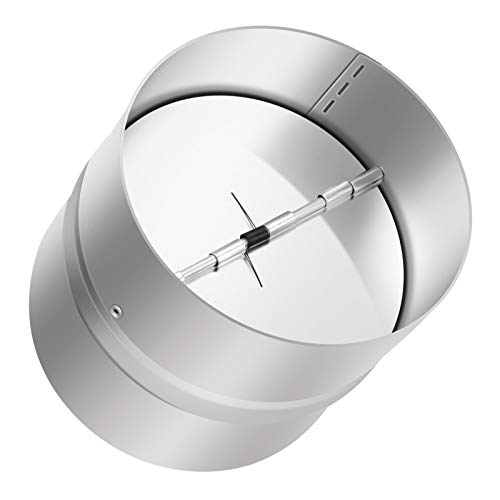
Kikerike’s 4-inch damper aims to reduce recirculation by inserting into the duct with aluminum flap leaves and galvanized steel housing. Best for inline applications and smaller ventilation runs where backflow prevention is essential. Limitation: 4-inch size may limit use in larger trunk lines; ensure duct diameter matches before purchase.
Buying Guide: Key Considerations For Selecting Duct Dampers
- Size compatibility: Measure duct diameter to match available dampers. Oversized dampers may not seal properly, while undersized units won’t fully block backflow.
- Material and environment: Stainless steel dampers perform well in humid or corrosive spaces; galvanized steel provides strength at a lower cost. Consider humidity, temperature, and exposure when choosing.
- Airflow control: Decide between fixed or adjustable airflow. Manual handles are common for local control; consider dampers with a scale or indicator for repeatable settings.
- Sealing and leakage: Look for rubber gaskets or edge seals to minimize air leaks. Some data notes indicate dampers aren’t fully sealed; sealing compounds may improve efficiency in long runs.
- Installation orientation: Most dampers work in horizontal or vertical configurations, but some require specific alignment of the spring or flap for optimal operation. Verify orientation requirements in your duct setup.
- Maintenance: Stainless steel components resist corrosion over time, reducing maintenance needs. Plan for periodic inspection of seals and hinges in high-use areas.
Frequently Asked Questions
- What size damper should I choose for a 6-inch duct?
– Choose dampers rated for 6 inches; check the bend end diameter and overall height to fit your duct run. - Do backdraft dampers seal completely?
– Most dampers provide airtight sealing around the opening, but some installations may require additional sealant for maximum efficiency. - Can I use a 4-inch damper in a 6-inch duct?
– No. The damper must match the duct diameter to function correctly and seal properly. - Are manual dampers easy to install myself?
– Yes. Most are inserted into the duct and secured with screws; ensure the spring orientation and flap movement are correct for the intended airflow direction. - Which material lasts longest in a humid kitchen or bathroom?
– Stainless steel dampers generally offer the best corrosion resistance in humid environments. - Should I seal joints after installing a damper?
– Sealing joints can reduce leaks and improve overall HVAC efficiency, especially in longer runs or draft-prone areas.