Best Home AC Units for Cool, Comfortable Living Spaces
Looking for an effective cooling solution for your home? This guide highlights five versatile air conditioners that fit common American living spaces, from bedrooms to small apartments. Each product is chosen for clear function, ease of use, and energy-conscious design. The top picks cover portable units, windowless evaporative cooling, and traditional window ACs—so you can balance portability, installation, and cooling power. The buyer’s table below summarizes the essentials of each option to help comparison at a glance.
| Product | Type | BTU / Coverage | |
|---|---|---|---|
| 8000 BTU, up to 350 sq. ft | |||
| Evaporative cooling for rooms without windows | |||
| 14000 BTU, up to 700 sq. ft | |||
| 5000 BTU, up to 150 sq. ft | |||
| 5000 BTU, up to 150 sq. ft |
Garvee 8000 BTU Portable Air Conditioner

This 8000 BTU portable unit provides 3-in-1 cooling, dehumidification, and fan with a 61°F–88°F adjustable range. It includes a 24-hour timer and a remote for flexible operation. Best for: bedrooms or small living spaces where portable cooling is preferred. Limitation: performance is most efficient in spaces up to 350 sq. ft, and proper venting with the included window kit is required for optimal exhaust.
FlowBREEZE Windowless Portable Air Conditioner
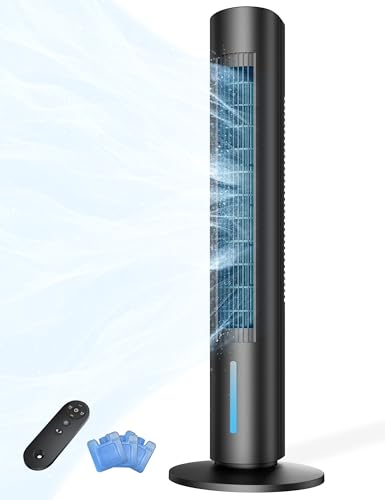
This 3-in-1 evaporative cooler has a large water tank and does not require window exhaust hoses. It acts as a fan, humidifier, and air cooler with a 7-hour timer and 140° oscillation for broad coverage. Best for: bedrooms, offices, or dorm rooms where window access is limited. Caution: evaporative cooling works best in dry climates; humidity may affect effectiveness in high-humidity areas.
Humhold 14000 BTU Portable AC Unit

This 14,000 BTU portable air conditioner cools large spaces (up to 700 sq. ft.) and includes modes for cooling, dehumidifying, and fan. It features smart/sleep mode and a 24-hour timer for flexible daily use. Best for: living rooms or open-plan areas in need rapid, substantial cooling. Limitation: higher BTU units can be louder and require more power and venting considerations.
Midea 5,000 BTU Window Air Conditioner

This window unit provides 5,000 BTU cooling for up to 150 sq. ft., with three modes (cool, fan, dehumidify) and a remote control for easy adjustments. Best for: small bedrooms or home offices needing a simple, affordable AC solution. Limitation: window installation requires clearance and may not suit renters seeking maximum portability.
GE Window Air Conditioner 5,000 BTU

GE’s 5,000 BTU window unit is designed for small rooms with quiet operation and two cooling modes. It features mechanical controls for reliability and straightforward use. Best for: compact spaces that require dependable, simple cooling without smart features. Caution: mechanical controls may feel less contemporary than digital controllers.
Garvee 8000 BTU Portable Air Conditioner

This 8000 BTU portable unit offers targeted cooling for spaces up to 350 sq. ft with 3-in-1 cooling, dehumidification up to 45 pints/day, and a 24-hour timer. It uses R32 refrigerant for energy-conscious operation. Best for: small living spaces or home offices needing compact, flexible cooling. Limitations: as a portable unit, performance depends on room layout and venting efficiency.
Buying Guide
What room size should drive your choice?
Smaller rooms (up to 150 sq. ft) benefit from 5,000 BTU window units or compact 6,000–8,000 BTU portables. Larger living spaces (400–700 sq. ft) may require 12,000–14,000 BTU portables for effective cooling, especially in warmer climates.
Portable vs. window units
Portables offer flexibility and no permanent installation but typically cost more per BTU and rely on venting. Window units are efficient, affordable, and compact for fixed spaces but require a window opening and permanence.
Smart features and energy use
Consider sleep mode, programmable timers, and energy-efficient refrigerants (like R32) to reduce operating costs. Quiet operation is important for bedrooms and study spaces; check decibel ratings if available.
Installation considerations
Window units need appropriate window frames and clearance. Portable units need space for exhaust hoses and a window kit. Evaporative windowless coolers require dry climates for best performance and may not replace traditional AC in humid areas.
Maintenance and filtration
Removable, reusable filters simplify upkeep. Regular cleaning extends unit life and maintains air quality. For evaporative models, monitor water levels and clean the tank to prevent mineral buildup.
FAQ
-
What size AC do I need for a bedroom?
Most bedrooms up to 150 sq. ft. do well with a 5,000 BTU window unit or portable 8,000 BTU depending on layout and climate.
-
Are portable air conditioners as effective as window units?
They can be, especially in flexible spaces, but may be less energy-efficient per BTU and require venting through a window or wall kit.
-
Is evaporative cooling good for humid climates?
Evaporative coolers work best in dry climates; high humidity reduces their cooling effectiveness.
-
Do I need professional installation for window ACs?
Most window units are installable with basic tools; follow included instructions. Some frames may require minor adjustment or supports.
-
Which features help save energy?
Look for units with energy-efficient refrigerants, programmable timers, sleep modes, and multi-speed fans to optimize energy use.
-
Can I cool a large open space with a single unit?
For spaces up to 700 sq. ft., consider high-BTU portable units or multiple smaller units, plus strategic airflow management to optimize coverage.