Best AC Unit Wood Covers for Outdoor Privacy and Ventilation
Answering the common search for an attractive, functional way to conceal outdoor AC units, these wood-constructed screens and enclosures balance privacy, airflow, and curb appeal. Ideal for homeowners seeking a natural look, backyards with limited space, or renters needing a portable option. The top picks below target different needs: decorative concealment, easy no-dig installation, and durable materials designed to withstand outdoor elements. A quick summary table follows to help you compare core specs at a glance.
| Product | Best For | Key Benefit | Material |
|---|---|---|---|
| CASTLECREEK Air Conditioner Fence Screen | Budget-friendly concealment | Perforated lattice for airflow | Solid fir wood |
| Enclo No Dig Richmond Cedar Screen | Classic wood look | No-dig installation | Cedar wood |
| Mederlo 3-Panel Screen | Flexibility in layout | Open-air flow with slat design | Solid wood |
| Enclo No Dig Charleston Cedar Screen | Stylish privacy wall | Same no-dig ease | Cedar wood |
| GDLF 3-Panel Screen with Planter Box | Integrated planter option | No-dig bottom connection, airflow | Natural wood |
CASTLECREEK Air Conditioner Fence Screen

Best for budget-conscious buyers who want a simple concealment solution. The CASTLECREEK unit uses solid fir wood with a lattice design that allows air to pass through without hindering airflow. This makes it suitable for standard outdoor AC units in moderate climates. The finish can be painted or stained to blend with existing décor, offering a customizable look. A potential limitation is that wood may require periodic maintenance to maintain appearance and durability in harsher weather.
Enclo No Dig Charleston Cedar Screen

Best for homeowners who value a natural, FSC-certified wood aesthetic. This 42″ x 38″ two-panel cedar screen emphasizes a stylish natural wood appearance with individual grain variations. It installs in about 45 minutes and uses a no-dig system with ground stakes, reducing installation time and preventing ground disturbance. Consider no-dig convenience as a trade-off if you need a deeper or taller enclosure; cedar wood may require occasional maintenance to preserve color and protection against weather.
Mederlo 3-Panel Outdoor Wood Privacy Fence
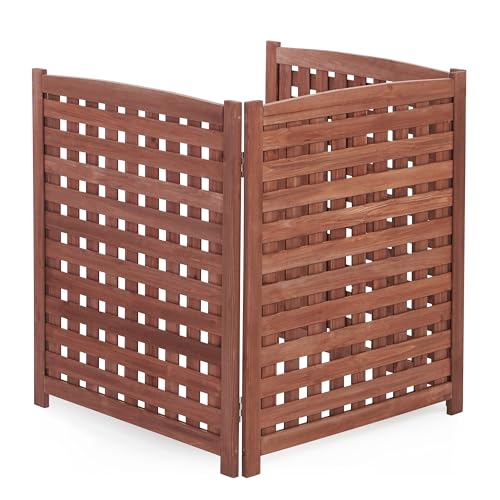
Choose this if you want versatile configurations. The 3-panel setup measures 32″ W x 38″ H per panel, enabling arrangements like squares, U-shapes, or straight lines for a customized privacy zone. It features a slat spacing design that promotes open air-flow to prevent overheating of the AC unit. Best for small to mid-size units in sunny climates; the wood’s natural appearance adds warmth but requires occasional weatherproofing to maintain longevity.
Enclo No Dig Richmond Cedar Screen

Best for a harmonious, classic cedar appearance. The 42″ x 38″ panels use FSC-certified cedar wood with a no-dig system that streamlines setup and minimizes ground disruption. Cedar naturally resists rot and can be finished to complement outdoor spaces. A caution is that cedar may require periodic sealing or staining to maximize lifespan in harsh environments, especially if exposed to heavy rainfall or sun exposure.
CLEASO 3 Panels No Dig Wooden Privacy Fence

Best for DIY-friendly setups with a warm wood aesthetic. The 3-panel, no-dig design is easy to install using included ground stakes and mallet. Panels conceal air conditioners, trash bins, pool pumps, and clutter, delivering a neat, unified backyard look. The natural solid wood construction means grain and tone vary, which can be a stylistic advantage but may require periodic maintenance to preserve color and protection against weathering.
GDLF Air Conditioner Fence With Planter Box

Best for those who want a built-in planter feature. This 33″ W x 38″ H fence uses a bottom connection to a planter box, providing stability without ground stakes. It promotes airflow with a slatted wood design, helping prevent overheating while offering additional greenery. A potential limitation is that planter maintenance (watering, soil, drainage) may be required to keep both plants and the fence looking good. It suits patios and decks where planters are desired as part of the aesthetic.
Buying Guide: What To Consider When Choosing An AC Unit Wood Cover
- Ventilation vs. concealment: Are you prioritizing airflow or maximum concealment? Perforated or slatted designs improve ventilation but may show more of the unit.
- Material durability: Cedar and fir offer different weather resistance and maintenance needs. Cedar tends to resist rot longer, while fir may require sealing, painting, or staining.
- Installation method: No-dig designs reduce ground disruption and installation time, ideal for renters or hardscaped yards.
- Size and configuration: Ensure the panel count and dimensions fit your AC unit and available space. Flexible layouts work best for irregular areas.
- Aesthetics: Choose a wood tone that complements your exterior and neighboring landscaping. Finishing options include staining or painting.
- Maintenance: Regular upkeep like sealing, staining, or painting can extend life and appearance, especially in harsh climates.
FAQ
Do these wood covers block airflow?
Most are designed with lattice or slat patterns to balance airflow and concealment. Perforated and slatted designs help prevent overheating while maintaining privacy.
Is no-dig installation durable for windy locations?
No-dig systems rely on ground stakes or bottom connections. They are generally quick to install and remove but check local wind conditions and secure stakes accordingly.
How often should wood covers be maintained?
Maintenance frequency depends on climate and wood type. Cedar may benefit from periodic sealing every 1–3 years, while fir may require more frequent staining or painting.
Can these covers double as planters?
Some designs include planter boxes or are compatible with planters, like the GDLF model. If planter use is desired, ensure drainage and weight considerations are addressed.
Are these covers suitable for all AC unit sizes?
Sizes vary per product. Measure your unit’s height, width, and depth to choose a panel system that provides adequate clearance for airflow and service access.