Best 6 to 4 Inch Duct Reducers for HVAC and Ventilation
When selecting a 6 to 4 inch duct reducer, choose a model that offers a reliable connection between different duct sizes, minimizes air resistance, and suits your system type. This guide highlights five practical options for a range of buyers, from DIY hobbyists to small workshop setups. Each product section explains who it’s best for and why, along with a clear caution when relevant.
| Product | Brand | Type | Best For |
|---|---|---|---|
| Kikerike Duct Reducer | Kikerike | Galvanized steel reducer | General ventilation and bathroom/kitchen fans |
| AC Infinity Duct Adapter | AC Infinity | Ducting reducer cone | Grow tents and inline systems |
| CABAX Duct Reducer | CABAX | PP-plastic adapter | Moisture-prone installations |
| Hon&Guan Duct Reducer | Hon&Guan | Metal duct reducer | Space-saving metal transitions |
| Teqooza Duct Reducer | Teqooza | Plastic duct adapter | Everyday HVAC connections |
Kikerike Duct Reducer 6 to 4

Product: Duct Reducter 6 to 4 Air Ducting Reducer Increaser Air Duct Adapter or Round Metal Pipe Reducer for Bathroom Kitchen Ventilation Systems.
- Best For: General bathroom, kitchen, and HVAC ventilation connections where a 6″ opening must join a 4″ duct.
- Material: Galvanized steel for durability and a metal-to-metal seal.
- Notes: Adapts 6 inches to 4 inches; suitable for round ducting applications.
Why selected: This model offers a simple metal transition that preserves airflow efficiency and is well-suited for standard duct work in domestic spaces. Caution: verify fitment with your specific duct thickness and mounting options.
AC Infinity Duct Adapter 6” to 4”

Product: AC Infinity Duct Adapter, 6” to 4” Ducting Reducer Increaser Cone for Grow Tent, Bathroom, Kitchen Ventilation Systems.
- Best For: Grow tents and inline ventilation systems where airflow consistency is important.
- Feature: Cone design helps connect different duct sizes while aiming to maintain efficiency.
- Note: Some setups benefit from raised lips on the smaller opening for grip, depending on duct type.
Why selected: The design emphasizes airflow continuity between differing diameters, which is useful in compact or modular installations. Caution: check that the cone’s lip dimensions fit your ducting clamps or adapters.
CABAX Duct Reducer 6 to 4 Inch

Product: CABAX Duct Reducer 6 to 4 inch Air Duct Adapter for Inline Ventilation System (150mm to 100mm), White.
- Best For: Seamless transitions between 6″ and 4″ duct systems in HVAC or inline ventilation.
- Material: Durable PP-plastic resists moisture and corrosion, suitable for damp environments.
- Note: Plastic construction may not be as heat-tolerant as metal in high-temperature applications.
Why selected: Plastic reducers like this are compact and moisture-resistant, making them a practical choice for bathrooms and kitchens. Caution: avoid extreme heat exposure beyond plastic tolerance.
Hon&Guan 6 to 4 Duct Reducer
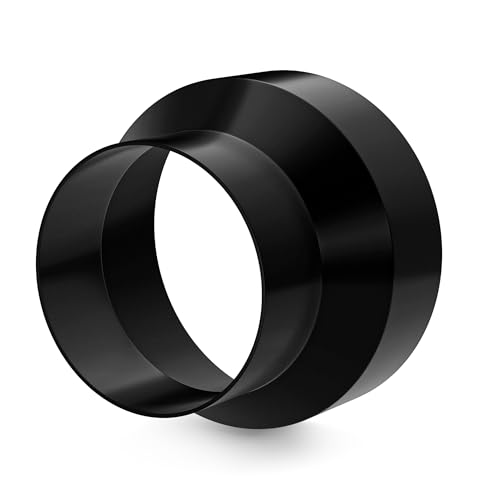
Product: 6 to 4 Duct Reducer Increaser 6 to 4 Reducer for 4/6 Inch Ducting HVAC Ventilation System – Black.
- Best For: Metal-to-metal transitions where space efficiency matters in HVAC or exhaust systems.
- Feature: Metal construction with a clear 6″ to 4″ spigot configuration; supports both rigid and flexible ducting in various installations.
- Note: Inner and outer spigot sizes should be confirmed against your duct dimensions before purchase.
Why selected: Its metal design provides durability and a compact profile for space-constrained installations. Caution: verify exact inner/outer diameters to ensure a proper seal with existing ducts.
Teqooza Duct Reducer 6 to 4

Product: Teqooza Duct Reducer, 6 to 4 inch Air Duct Adapter Durable Plastic HAVC Pipe Connector for Inline Ventilation System (150mm to 100mm), White.
- Best For: General inline ventilation connections in homes and small workshops.
- Material: Durable PP-plastic, moisture-resistant, corrosion-free.
- Limitations: Plastic construction may be less robust under high mechanical stress than metal options.
Why selected: Easy installation and material that resists moisture makes it a practical choice for routine duct transitions. Caution: ensure compatibility with your clamps and fasteners for a secure fit.
Buying Guide
- Material matters: Metal reducers (galvanized steel or other metals) tend to be more durable and heat-tolerant, while plastic variants are lighter and moisture-resistant. Choose based on environment and expected wear.
- Size accuracy: Confirm inner and outer diameters for both ends. Mismatches can cause air leakage or a poor seal.
- Installation context: For damp areas like bathrooms or kitchens, moisture resistance is important. For grow tents or dry spaces, metal can be advantageous for longevity.
- Clamps and fittings: Some sets include hose clamps or adapters; if not, verify compatibility with your existing clamps and ducting clamps to ensure a tight seal.
- Airflow impact: The reducer should minimize turbulence; tapered or conical designs help maintain smoother flow between sizes.
- Durability vs. budget: Metal reducers last longer in demanding environments; plastics offer cost savings and simpler handling for casual use.
FAQ
- What does a 6 to 4 inch duct reducer do? It connects a 6-inch duct to a 4-inch duct, enabling a seamless transition between sizes in ventilation or exhaust systems.
- Are plastic reducers suitable for high-heat applications? Plastic is generally suitable for moderate temperatures; metal may be preferred where heat is a concern.
- Do these reducers affect airflow significantly? Properly sized and fitted reducers minimize turbulence and maintain airflow better than ad hoc adapters.
- Should I buy a set with clamps? A kit including hose clamps makes installation easier and helps ensure a secure seal.
- How do I choose between metal and plastic? Consider environment, humidity, mechanical stress, and durability needs; metal for harsh or long-term use, plastic for easy handling and moisture resistance.
- Is exact dimension matching important? Yes—measure duct outer diameter and the reducer’s end diameters to prevent leaks and fit issues.