Best Axial Fans for Ventilation: Quiet DIY Exhaust Solutions
Axial fans are a practical choice for DIY cooling, ventilation, and exhaust projects. The following five models are selected for American readers seeking reliability, long life, and flexible mounting. Each product offers features such as silent operation, durable construction, and straightforward installation for crawl spaces, basements, attics, and enclosed workspaces. This article compares performance, build quality, and versatility to help you choose the right axial fan for your ventilation needs.
| Product | Brand | Key Benefit | Ideal Use |
|---|---|---|---|
| AC Infinity AXIAL 1225 | AC Infinity | Low-speed, quiet operation with a long lifespan | DIY cooling and exhaust projects |
| AC Infinity AXIAL LS1238 | AC Infinity | Higher speed with dual-ball bearings | High-output ventilation needs |
| MOUNTO 12-Inch Axial Fan | MOUNTO | High CFM with portable, flexible setup | Confined spaces like crawl spaces, attics |
| AC Infinity AXIAL 1238 | AC Infinity | Reliable UL-certified muffin style with versatile mounting | DIY cooling and exhaust projects |
| Wathai EC 120mm x 25mm | Wathai | EC efficiency with long bearing life | Small- to mid-size ventilation tasks |
Note: All products listed are axial fans suitable for ventilation and exhaust applications. Images and features are provided by the respective product listings and manufacturers.
AC Infinity AXIAL 1225 Quiet Muffin Fan
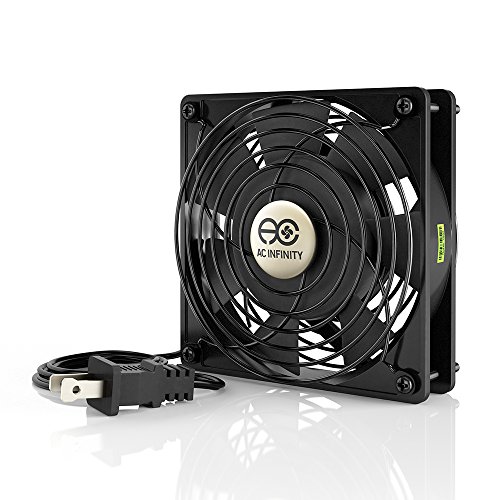
The AXIAL 1225 is designed for projects requiring cooling or ventilation, with a compact 120mm by 25mm footprint. It includes a heavy-duty aluminum fan, a power plug cord, two fan guards, and a mounting screw set. The UL-certified fan uses dual-ball bearings, offering an extended lifespan around 67,000 hours. Its versatility includes mounting in any direction, making it suitable for DIY cooling, cabinet exhaust, or electronics enclosures where space is limited.
AC Infinity AXIAL LS1238 Quiet Muffin Fan
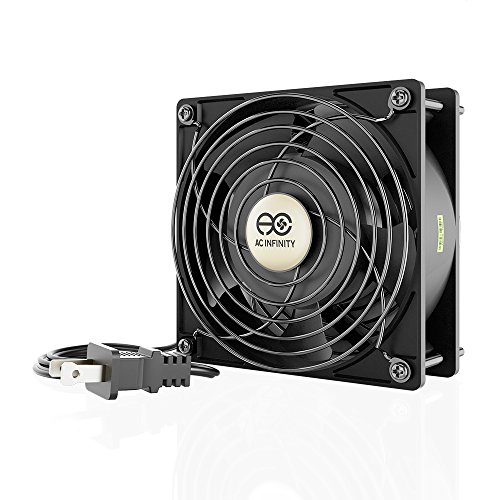
The AXIAL LS1238 expands on the classic muffin fan design with a 120mm by 38mm body, optimized for low-speed yet capable ventilation. It ships with a heavy-duty aluminum housing, power plug cord, two guards, and mounting screws. UL certification and dual-ball bearings deliver a long life up to 67,000 hours. Its mounting flexibility and robust construction make it suitable for DIY cooling, computer or electronics enclosures, and exhaust projects where quiet operation is valued.
MOUNTO 12-Inch Heavy Duty Cylinder Axial Fan

The MOUNTO 12-Inch fan delivers high directional airflow at up to 2900 CFM, making it ideal for crawl spaces, attics, and basements where strong ventilation is needed in a compact form. The unit features a heavy-duty orange-coated steel construction for durability and a 25-foot vinyl hose for flexible positioning. This model is well-suited for long runs or larger spaces that require robust exhaust capabilities and easy adjustment of air path.
AC Infinity AXIAL 1238 Muffin Fan
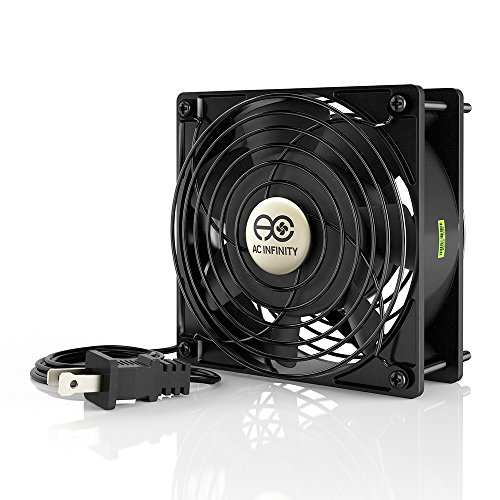
The AXIAL 1238 is a high-speed muffin fan designed for DIY cooling and ventilation projects. It includes a heavy-duty aluminum fan, power cord, two guards, and mounting screws. Dual-ball bearings provide a long service life, and the fan can be mounted flat or upright depending on space constraints. This model balances increased airflow with reliability, making it a solid choice for booths, enclosures, or tool sheds requiring efficient exhaust and steady performance.
Wathai EC 120mm x 25mm Ball DIY Fan

The Wathai EC 120mm x 25mm axial fan emphasizes efficiency with an EC motor, reducing power consumption while delivering solid airflow. It is designed for a range of projects requiring cooling or ventilation and serves well as a lightweight replacement fan for electronics or compact enclosures. The dual-ball bearing setup extends longevity, and its versatile mounting supports upright or flat orientations to fit various configurations.
Buying Guide: Key Purchase Considerations
- Airflow needs: Measure the space or enclosure to estimate required CFM. Higher CFM is useful in larger rooms or long duct runs; smaller volumes benefit from quieter, modest airflow.
- Noise level: Look for muffin-style or low-speed designs for quiet operation in living or work areas. Noise is often reported in dB; lower numbers indicate quieter fans.
- Mounting flexibility: Choose fans with multiple mounting orientations (horizontal, vertical, or flat) to suit awkward spaces like crawl spaces or tight cabinets.
- Durability and bearings: Dual-ball bearings offer longer life and smoother operation, especially in high-usage environments. UL certification signals safety and reliability.
- Power and voltage: Check compatibility with available power sources. DC vs AC motors affect efficiency and control options. PWM dimmers allow on-the-fly speed adjustment.
- Wiring and controls: Some models include plug-and-play cords and guards; others may require additional wiring or mounting hardware. Ensure guards and screws are included if needed.
- Physical dimensions: Confirm the mounting footprint matches your enclosure or ducting. Muffin fans typically fit compact spaces, while larger 12-inch models suit bigger voids.
- Durability in hostile environments: For spaces with dust, moisture, or temperature fluctuations, stainless or coated housings provide better longevity.
- Lifecycle and maintenance: Fans with longer rated lifespans reduce replacement frequency. Consider ease of cleaning guards and accessible mounting points.
- Cost versus value: Higher-quality fans with longer lifespans and better bearings may have higher upfront costs but lower total cost of ownership over time.
When selecting an axial fan for ventilation, prioritize your space, desired noise level, and the need for mounting flexibility. The models above strike a balance between performance, durability, and ease of installation for typical DIY cooling and exhaust tasks.