Best Air Vent for Plumbing: Top Picks for Reliable Drainage Venting
Choosing the right air vent for plumbing helps protect traps, prevent sewer gas from entering living spaces, and ensure smooth drainage. This guide reviews five dependable options from well-known brands, highlighting how they function, where they’re best used, and what to consider when selecting one for your home. Each option below is suitable for common residential setups, from under-sink vents to branch and stack vent connections.
| Product | Brand | Key Use | DFU Capacity |
|---|---|---|---|
| Oatey Sure-Vent 1-1/2 in.–2 in. 160 Branch, 24 Stack DFU Air Admittance Valve | Oatey | Secondary vent, DWV systems | Up to 160 DFU Branch / 24 Stack |
| Oatey 39012 1.5 in. ABS In-Line Vent | Oatey | In-line venting for various fixtures | Noted for inline use |
| Oatey 39016 Sure-Vent 1.5 in x 2 in. 160 Branch, 24 Stack DFU | Oatey | Secondary vent for multi-fixture runs | Up to 160 Branch / 24 Stack |
| Studor Redi-Vent Air Admittance Valve | Studor | Compact venting for single or few fixtures | Up to 20 DFUs |
| Studor Mini-Vent Air Admittance Valve | WELD-ON | Single or small groups of fixtures | Up to 160 DFUs Branch / 24 DFUs Stack |
Below, discover five product sections with details, installation notes, and what makes each option a solid choice for typical residential plumbing projects.
Oatey Sure-Vent 1-1/2 In.–2 In. 160 DFU Air Admittance Valve

Oatey’s Sure-Vent is a widely used air admittance valve designed to replace or supplement a vent line in DWV systems. It supports up to 160 DFU on a branch and 24 DFU on a stack, providing a compact alternative to traditional vent piping. The included PVC Sch. 40 adapter offers straightforward integration into various drainage configurations. The unit operates passively, using gravity to seal and unseal as system pressure changes, helping prevent sewer gas infiltration when the main vent line is unavailable or impractical.
Key considerations: suitability for a range of residential fixtures, compatibility with standard PVC piping, and rated performance for moderate drainage loads. Installation typically requires sealing at the connection points and ensuring the valve remains accessible for service. This model is well-suited for under-sink installations, bathroom groups, or where vent piping would be intrusive.
Oatey 39012 1.5 In. NPT ABS In-Line Vent
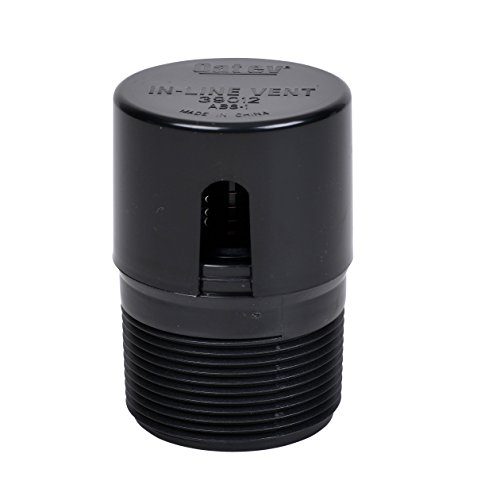
This ABS in-line vent is designed to help prevent sewer gases from entering living spaces by providing a controlled air inlet for drainage systems. The unit is spring-loaded to open with negative pressure and close with positive pressure, enabling automatic venting as fixtures discharge and then sealing to maintain trap protection when pressure normalizes. Its inline design makes it convenient for installations where a direct vent route is available but a dedicated vent line would be impractical.
Considerations include ensuring compatible pipe materials (ABS) and verifying the inline location aligns with the drain layout. This vent is particularly useful for retrofit projects where adding new roof vents would be disruptive or costly.
Oatey 1.5-2″ White 39016 Sure-Vent With Adapter

This Sure-Vent model combines a 1.5-inch to 2-inch connection with a 160-branch / 24-stack DFU rating and a straight PVC Schedule 40 adapter. It complies with ASSE standards for air admittance valves and is intended as a secondary vent option in many DWV configurations. Its straight adapters facilitate simpler alignment with existing vent stacks and branch pipes, making it a versatile choice for kitchens, bathrooms, and laundry areas where additional venting is necessary but traditional vent pipings are impractical.
Practical considerations include adherence to code requirements for secondary vents in your district, clearances from cabinetry, and ensuring the valve remains accessible for inspection or service. This option works well for moderately complex drainage runs that require reliable odor control without extensive vent rerouting.
Studor Redi-Vent Air Admittance Valve

The Studor Redi-Vent is a compact air admittance valve with a PVC adapter, designed for single fixtures or small groups of fixtures up to about 20 DFUs. It uses gravity to seal and unseal as demand changes in the drainage system, preventing sewer gas from circulating and maintaining trap integrity. This product is favored in tight installations such as under-sink cabinets or laundry nooks where space is at a premium and a discrete vent solution is desirable.
Important considerations include ensuring proper placement to avoid freezing in colder climates and confirming compatibility with the pipe diameter and adapter type. Its small footprint makes it a practical choice for remodels or cosmetic-overhaul projects where visible venting is undesirable.
Studor Mini-Vent AAV With PVC Adapter

The Studor Mini-Vent is a compact AAV designed for single fixtures or small groups, with a 160 DFU branch and a 24 DFU stack capacity. It relies on gravity to seal when negative pressure subsides, helping prevent odors from escaping into living spaces. Its PVC adapter makes it compatible with a range of standard vent configurations, and its discrete size is ideal for tight installations under cabinets or within shelving units.
Key considerations include ensuring the vent is installed in a sheltered location to prevent freezing and selecting a model that matches the overall drainage design to avoid over-venting or under-venting the system. This option balances size, performance, and ease of installation for modest drainage runs.
Buying Guide: Choosing the Right Air Admittance Vent
When selecting an air admittance valve (AAV) or in-line vent for plumbing, several factors influence performance and code compliance. The following considerations help buyers compare options and choose the best fit for their home:
- Vent type and use: Decide whether you need a traditional AAV (gravity-operated) or an inline vent. AAVs are common for single fixtures or small groups, while inline vents can integrate into existing pipes with minimal disruption.
- Drain Fixture Units (DFUs): DFU ratings indicate how much drainage the vent can support. For larger fixture groups or stacks, choose models with higher DFU compatibility to prevent vent failure or seal loss.
- Connection size and adapters: Ensure the vent size (1-1/2″ or 2″) matches your plumbing and that adapters (PVC, ABS) are compatible with your pipes.
- Code compliance: Look for models that comply with ASSE 1050/1051 standards. Local codes may require specific venting configurations or prohibit certain devices, so verify requirements before installation.
- Installation location: Place vents where they remain accessible for service and where temperature extremes won’t compromise operation (freezing risk, direct sun, or moisture exposure).
- Maintenance and accessibility: Some AAVs require periodic inspection or replacement seals. Choose models with straightforward maintenance if you anticipate servicing needs.
- Durability and material compatibility: ABS and PVC components suit many residential environments, but consider chemical exposure and contact with solvents or cleaners when selecting materials.
- Remodel compatibility: For kitchens, baths, or laundry areas where vent routing is constrained, compact or inline options may reduce installation complexity and preserve cabinet space.
In summary, the best choice depends on your venting goals, fixture count, and the constraints of your space. For retrofit projects or spaces with limited vent routing, compact AAVs like the Studor Mini-Vent or Redi-Vent provide practical solutions. For broader or more complex drainage runs, inline options such as certain Oatey models offer higher DFU capacities and versatile adapter configurations. Always consult local codes and consider professional assessment when in doubt about venting requirements.