Best Air Conditioners for Basements Without Windows: Cool Comfort Anywhere
Transform a windowless basement into a comfortable living or workspace with portable and evaporative cooling solutions. This guide highlights five reliable options that adapt to spaces without windows, emphasizing energy efficiency, ease of use, and practical features.
| Product | Brand | Key Features |
|---|---|---|
| Dreo Portable Air Conditioners, 12000 BTU ASHRAE | Dreo | APP/Voice/Remote control, drainage-free cooling, quiet operation |
| COOLECH 42 INCH Windowless Portable Air Conditioners | COOLECH | 4 modes, 3 speeds, 90° oscillation, 28 ft/s air throw |
| FANCOLE Windowless Air Conditioner | fancole | 3 ice packs, 24H cooling, 7H timer, large water tanks |
| MYICY Evaporative Air Cooler, 35″ Windowless | MYICY | 35 inch height, 2 modes, 3 speeds, removable tank |
| COOLECH Windowless Air Conditioner with Waterless Alert | COOLECH | 4 modes, 3 speeds, waterless alert, 20H cooling |
The products listed are chosen for basements without windows, offering portable or evaporative cooling that doesn’t rely on a window frame. They vary in cooling power, water or waterless operation, and noise levels, helping you balance comfort with energy use and maintenance.
Dreo Portable Air Conditioners, 12000 BTU ASHRAE

The Dreo AC515S offers true portability for windowless spaces. It provides 12000 BTU ASHRAE cooling capacity and 8000 BTU DOE, with drainage-free operation so you can avoid extraneous setup. Features include an ultra-quiet cooling system and a four-prong control scheme (app, voice, remote, and built-in controls) to help you maintain a comfortable temperature in basements where a fixed installation isn’t feasible. Its compact footprint and remote operation support flexible placement in rooms or work areas without outside access.
Key features include: drainage-free design, multiple control options for convenience, and a balance between powerful cooling and quiet operation. The unit is suitable for rooms that reach up to mid-sized basement spaces, and the smart controls make it easier to manage temperature throughout the day and night.
COOLECH 42 INCH Windowless Portable Air Conditioners
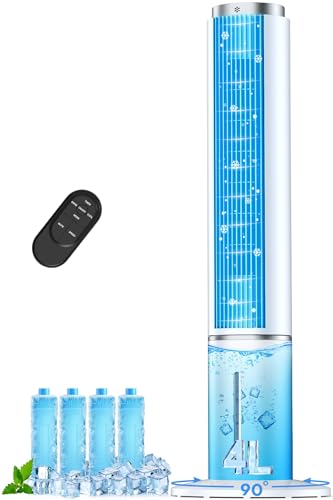
This 42-inch COOLECH model is designed for large, windowless spaces. It features four modes (Cooling, Normal, Sleep, Nature) and three wind speeds, delivering up to 28 ft/s air throw and 90° oscillation for uniform room coverage. With a powerful 1400 CFM capacity, it’s capable of cooling areas up to several hundred square feet, which can translate well to larger basements or open-concept lower levels. It also emphasizes user safety with a smart design that minimizes moisture buildup and helps maintain a comfortable humidity level.
Highlights include a wide cooling range, an automatic oscillation feature, and a robust air distribution system that helps reduce hotspots in basement layouts where airflow can stagnate. This option is suitable when you want strong, even cooling across a larger space without a window frame.
FANCOLE Windowless Air Conditioner

The FANCOLE windowless unit combines evaporative cooling with extended water capacity for long runtime. It includes three ice packs and a 7-hour timer, along with a 24-hour cooling capability from dual water tanks. The top-fill design simplifies refilling, which is helpful for basements where constant supervision may be limited. This model is suited for dry-basement environments where evaporative cooling can significantly reduce ambient humidity while lowering the temperature.
Notable considerations include the need for an adequate water supply and the potential humidity increase in the basement, which evaporative cooling can augment. It’s a cost-effective and low-maintenance option for spaces that don’t require deep, rapid cooling, and it provides flexibility with timer programming and long-running operation.
MYICY Evaporative Air Cooler, 35″ Windowless

MYICY’s 35-inch evaporative cooler is designed for easy access and practical basement use. With two cooling modes and three fan speeds, it offers customizable airflow while maintaining a lower energy profile compared to traditional air conditioners. The removable water tank simplifies cleaning and refilling, and the extended runtime makes it suitable for basements that may be used for extended periods, such as home offices or hobby spaces. The unit’s height and lightweight design facilitate placement under stairs or in corners where space is tight.
Key considerations for this option include humidity management, as evaporative coolers add moisture to the air. They work best in drier basements and can provide comfort without heavy electricity use, though they may not reach extremely low temperatures in very hot climates.
COOLECH Windowless Air Conditioner With Waterless Alert
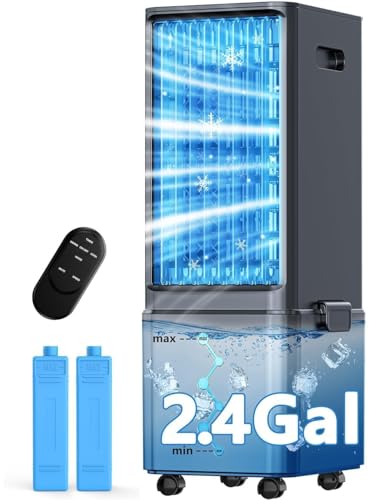
This COOLECH model emphasizes safety with a waterless alert system to prevent running the unit when water is low. It offers four modes and three speeds for flexible cooling, plus a sizable 20-hour cooling capacity. The windowless design is well-suited for basements that require adjustable cooling patterns, particularly in spaces where continuous running is desirable but water management is a concern. The waterless feature makes maintenance easier and reduces the risk of leaks or overflows in tight basement areas.
Considerations include ensuring sufficient air circulation and humidity control, as evaporative-based units can still introduce humidity. For basements, pairing with a dehumidifier or using a model with humidity-aware settings can optimize comfort and prevent dampness.
Buying Guide: Key Purchase Considerations For Windowless Basements
- Cooling capacity vs. space: Windowless units vary from compact personal coolers to larger evaporative machines. Choose by square footage, ceiling height, and whether the basement is open-plan or partitioned.
- Water vs. waterless operation: Evaporative coolers rely on water and add humidity, which can be beneficial in dry basements but less effective in humid climates. Waterless alerts reduce maintenance but may limit continuous cooling.
- Humidification vs. dehumidification balance: In damp basements, consider units with dehumidification modes or pair with a dehumidifier to prevent mold risk and maintain comfort.
- Noise levels: In basements used as living spaces or home offices, low-noise models (often 30–40 dBA) are preferable to avoid disturbances.
- Ventilation and air distribution: Look for features like 90° oscillation, multiple fan speeds, and easy airflow direction adjustments to avoid hotspots.
- Power and placement flexibility: Portable units should have caster wheels, lightweight designs, and stable bases for versatile placement near living areas or stairs for easier extraction of warm air.
- Controls and smart capabilities: App or remote control, scheduling, and voice assistant compatibility can improve daily usability in a basement with limited accessibility.
- Maintenance and longevity: Removable tanks, accessible filters, and water treatment options help sustain performance, especially when used extensively.
- Energy efficiency: In basements, where cooling needs can be ongoing, energy-efficient inverters or high SEER-equivalent models can reduce long-term costs.
- Evaluate room layout: Corner placement vs. open floor plan affects cooling efficiency; consider models that offer broad air distribution.
- Assess humidity levels: If the basement has high moisture, opt for units with humidity control or pair with a dehumidifier for optimal comfort.
- Think about drainage: Some portable units require drainage; windowless options often avoid this, but check for condensation management in humid basements.
- Plan for maintenance: Easy-to-clean tanks and accessible filters reduce upkeep time and improve performance over time.
These considerations help tailor a windowless cooling strategy to basement environments—balancing comfort, energy use, and maintenance while ensuring safe and effective operation in spaces without external openings.