Best Air Bleeder for Boiler: Top Auto Air Vent Valves for Efficient Heating
When maintaining a boiler system, removing trapped air is essential for efficiency and longevity. Automatic air vents, or air bleeders, help purge air from radiators, baseboards, and other heating loops, reducing noise and improving circulation. This guide highlights five reliable options with solid brass construction, high maximum pressures, and easy maintenance. Each product review includes key features to help you compare performance, durability, and compatibility with common heating systems across American homes.
Summary of chosen products
| Product | Brand | Key Benefit | Typical Use |
|---|---|---|---|
| Taco 400-4 HY-Vent | Taco | Sturdy brass, cleanable top | Hot water radiators, baseboards, convectors |
| Hydro Master Automatic Air Vent Valve | HYDRO MASTER | Heavy-duty brass, high temp | Most heating systems |
| Saillong 4 Pack 1/8″ Automatic Air Vent | Saillong | Value pack, brass construction | Hot water radiators and small heaters |
| Valemo VFV-12 Automatic Air Bleed Vent | Valemo | Compact, reliable 1/8″ NPT | General HVAC/boiler loops |
| Beduan 10500-VE Automatic Float Valve | Beduan | High-temperature resistance | HVAC exhaust and air release |
Across these selections, you’ll find common traits: brass bodies for durability, 150 psi maximum working pressure, and compatibility with typical 1/8″ or 1/2″ pipe connections. When choosing, consider system pressure, temperature range, and whether you prefer a single-vent or a multi-pack for multiple zones.
Taco 400-4 1/8-Inch-NPT Float Air Hy-Vent

The Taco 400 HY-Vent is designed for hot water radiators, baseboards, convectors, radiant panels, and small unit heaters. It features sturdy brass construction and a maximum working pressure of 150 psi, making it suitable for many residential boiler loops. An important maintenance detail is that the vent allows top-threaded access for cleaning, which helps sustain performance over time. Its compact form fits neatly in small piping spaces, and its float mechanism provides automatic air release as air accumulates in the system.
Key considerations include ensuring compatibility with your system’s pipe size (1/8″ NPT in this model) and verifying that the vent’s opening and cleaning procedure align with your service routines. For homeowners seeking a durable, serviceable vent with straightforward maintenance, the Taco unit offers a reliable option without complex installation requirements.
Hydro Master Automatic Air Vent Valve 1/8 Inch Brass
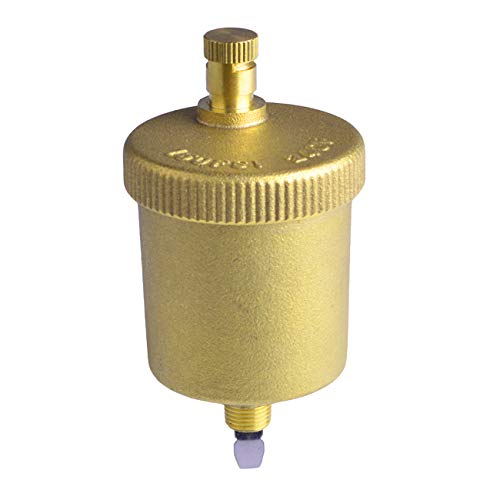
The Hydro Master unit is built from heavy-duty brass and is designed to fit most heating systems. It operates at a maximum pressure of 150 psi and a maximum temperature of 240°F, making it versatile for modern boilers and radiant loops. The universal 1/8″ auto air valve vent ensures broad compatibility across different plumbing layouts, and the brass construction contributes to long-term reliability in moisture-rich environments.
When selecting this vent, consider the availability of replacement parts and whether your system has space for a compact auto vent in the desired location. If you need a dependable vent that tolerates higher temperatures and pressures, this model provides a robust balance of durability and ease of use.
Beduan Brass 10500-VE Automatic Float Valve

This Beduan model is designed for removing excess air during exhaust operations in HVAC systems. It features a maximum pressure rating of 150 psi and a broad temperature range from 33°F to 240°F, with corrosion-resistant and high-precision components. The automatic float valve design supports reliable venting without frequent manual intervention, making it suitable for both new installations and retrofits in residential boiler circuits.
Prospective buyers should verify the thread size and fitment—this version supports 3/4″ male thread connections. For systems requiring consistent air release performance with robust temperature tolerance, Beduan’s 10500-VE offers a solid option that pairs well with larger radiators or loop configurations that demand higher flow control.
Valemo VFV-12 1/8″ NPT Automatic Air Bleed Vent

The Valemo VFV-12 offers a compact 1/8″ NPT threaded connection with an automatic air bleed function. Its design aligns with standard boiler and heating loops, providing an unobtrusive way to vent air from closed hydronic systems. Rated for up to 150 psi, this vent suits both residential and small commercial configurations where space is at a premium.
Choosing this vent can be advantageous when you need a simple, dependable solution that fits tight installations. The VFV-12 is commonly favored for its straightforward replacement in existing plumbing runs, reducing downtime during maintenance tasks and enabling consistent air removal across multiple zones if used in a multi-vent array.
Saillong 2 Pack 1/8 Inch Automatic Air Vent Valve

The Saillong 2 Pack provides two 1/8″ auto air vent valves designed for hot water radiators and heating systems. Constructed from brass, these vents handle typical residential temperatures and pressures up to 150 psi, with a maximum operating temperature around 240°F. The pack format offers a cost-efficient way to tackle multiple vent locations, which can improve overall system efficiency by removing trapped air from several zones.
For users installing new loops or upgrading aging vents, Saillong’s 2-pack provides flexibility and redundancy. As with most auto vents, ensure correct thread compatibility and consider the vent placement for optimal air extraction paths within the piping network.
Beduan Brass 10500-VE Automatic Float Valve (3/4″ Male Thread)
This Beduan variant uses a 3/4″ male thread for larger system applications where higher flow or space constraints demand a bigger venting interface. Like the 1/2″ variant, it emphasizes high-temperature resistance and reliable sealing, ensuring minimal water discharge during venting. It’s suitable for HVAC exhaust operations and venting in bigger radiators or heating sections where air pockets can persist in larger loops.
When integrating this vent, verify compatibility with your pipe fittings and confirm the thread standard on your equipment. The 3/4″ form factor is less common in compact residential installations but can be valuable in larger, multi-zone boiler networks or retrofit projects that require a robust air-release mechanism across multiple circuits.
Buying Guide: Key Purchase Considerations
- System compatibility: Verify thread size (1/8″ NPT, 1/2″ NPT, or 3/4″ options) and ensure the vent matches your boiler or radiator connections.
- Pressure and temperature ratings: Prioritize vents rated up to at least 150 psi and 240°F for standard residential boilers and radiant systems.
- Material durability: Brass bodies provide longevity and corrosion resistance in moist heating environments, reducing maintenance frequency.
- Maintenance needs: Some vents offer top-threaded access for cleaning. Consider how easy it is to service or replace components when needed.
- Pack versus single units: If venting multiple zones, a pack (like Saillong 4-pack) can reduce installation time and cost per vent.
- Installation space: Choose compact vents for tight spaces near radiators or near boiler supply lines where air tends to accumulate.
- System goals: For larger, high-flow loops, larger-thread vents may be beneficial; for standard hydronic networks, 1/8″ or 1/2″ vents are typically sufficient.
- Replacement parts and availability: Check whether the brand provides replacement seals, diaphragms, or gaskets to extend vent life.
- Multi-vent strategy: In some setups, placing vents at both supply and return lines improves air removal efficiency across the entire loop.
In sum, the best air bleeder for your boiler depends on your system’s size, pressure and temperature ranges, and space constraints. The listed options cover common residential configurations, from single-vent replacements to multi-vent packs, with an emphasis on durable brass construction and straightforward maintenance. When in doubt, consult a qualified HVAC technician to verify compatibility with your boiler and to optimize vent placement for maximum heating efficiency.